
Words by Maskass AEM
This piece is a supplement within the “Fields of Gestures” issue
We learn a lot from our relationships — even the digital ones. Through video games, I’ve discovered how identity can be fluid, how empathy can be practiced, and how fiction can become a space for self-discovery. Games like Life is Strange (the first, second, and True Colors) or The Alters taught me that understanding others begins with learning to play, to listen, to make choices, to fail, and to try again.
Video games are often dismissed as escapism, but they’re also a way of expressing and reshaping who we are. They let us experiment with identity instead of stumbling into it by chance. Representation of minorities becomes crucial here, as social norms shift and expectations evolve. Interactive fiction, in particular, invites players to question themselves: to recognize a piece of their own story in a character, or to sit with discomfort when they don’t. Even when I disagreed with a character’s choices, I learned compassion by understanding why they made them. Fictional characters became as formative as real people in my life: some admirable and some not, all revealing something about who I am. And few of them became vital in how I see the world now.
These kinds of role models were as important as any person in my life by teaching me lessons, putting visibility on experiences I didn’t find words to explain.
This is the case for the paradoxical nature of women’s rare representations in video games. When women are either represented as romantic or sexual partners/characters, minimizes their role to trophies collected by presumably heterosexual players, reflecting a very phallocentric view of women.
We see this with Citra in Far Cry 3, who represents the fantasy of a woman of color from an indigenous tribe, and with the character of Lara Croft in Tomb Raider, who is hyper-sexualized with a non-athletic body that prevents her from carrying out these adventures. They are simply designed for the male gaze. By wanting to be appealing, the designers center their bodies rather than their abilities.
Yet, newer portrayals are breaking the mold: Abby from The Last of Us Part II and Chun-Li from Street Fighter embody strength, both portrayed as muscular women. Such characters challenged how the gaming community defines femininity. Abby, for her survivalist realism; Chun-Li, for her athleticism and cheerful seriousness. They shattered the myth that power and beauty can’t coexist.
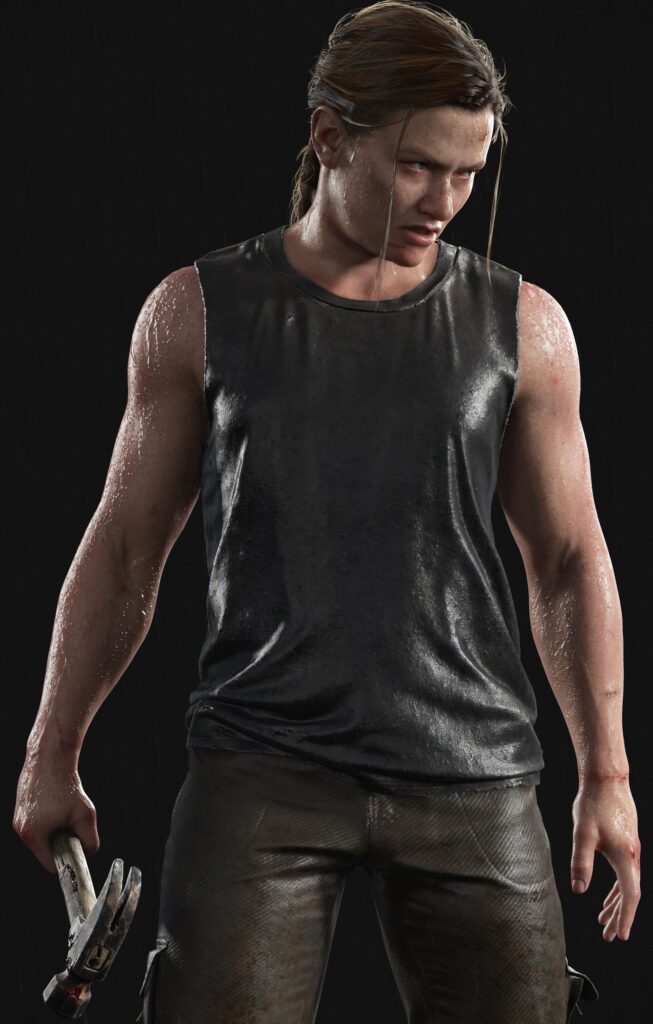
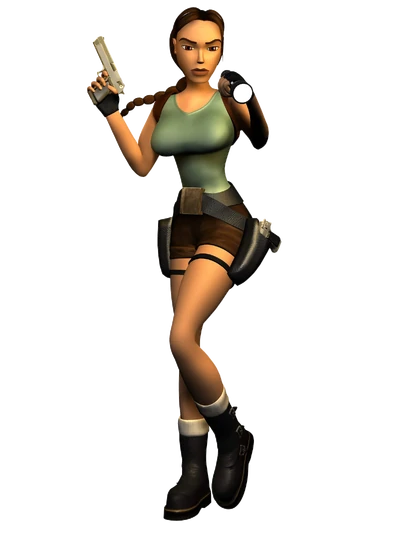
Abigail (Abby) Anderson – The Last of Us Part 2 & Lara Croft – Tomb Raider
While games can create community through shared stories, they can also isolate those who never see themselves reflected.
Growing up, I watched my culture portrayed as dangerous or uncivilized — a stereotype so common it began to shape how others saw me.
Even in fiction, stereotypes seep from the real world and reify racist and Islamophobic images.
In various mainstream games, the player is assumed to be white, while the villains come from “exotic” places modeled after the Middle East, Africa, or Asia. Non-white characters are rarely heroes — more often, they’re obstacles to be defeated.
But there’s another way. Games like Spider-Man: Miles Morales or The Walking Dead (with Lee and Clementine) humanize non-white heroes, offering new ways to imagine belonging. Representation isn’t about ticking boxes; it’s about expanding empathy, showing that anyone can be the center of the story. Anyone can be a hero, no matter their past it is a choice to take acquaintance.
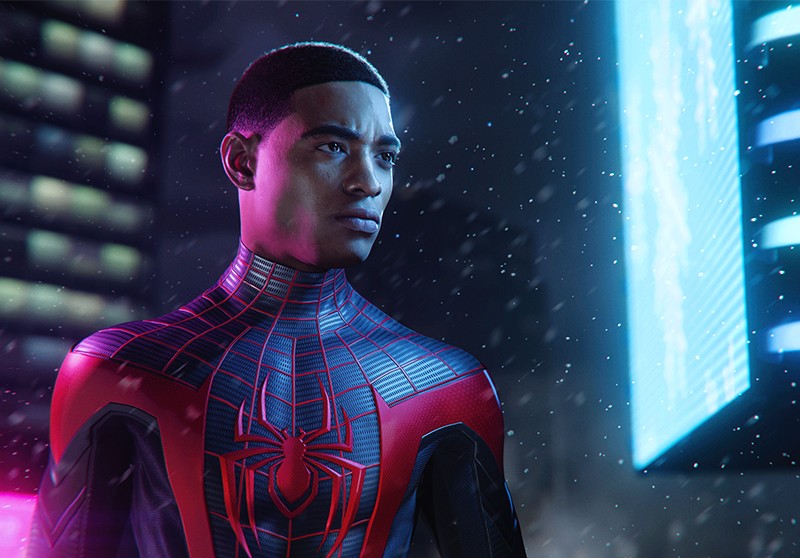
Miles Morales – Spider-Man: Miles Morales
Often, it is easier to focus on why we should represent every perspective, rather than questioning how to do it properly. We tend to overlook the reason why it would be beneficial for minorities to play characters that look like them by appearance or behavior, or role models we’ve grown to idealize.
Representation also includes what can’t always be seen. Hellblade: Senua’s Sacrifice is the best example of this: it features Senua, a warrior suffering from hallucinations. The gameplay immerses us in Senua’s psychosis, in a way that is both brilliant and frustrating. Here, we see how videogames provide a unique experience by being in the front row of the character’s journey.
In Life Is Strange, we play Maxine Caufield, who has the power to go back in time. This choice-based game1 shows us, through the character of Kate, our duty to care for those who have suffered traumatic events. The only moment in the videogame where we can no longer rewind time is when Kate is on a rooftop, about to jump.
Depending on whether you showed her interest or not, the player has to persuade her not to jump. If you succeed, you might have her end in your arms, or you might see the consequences of your own inaction.
Sexuality or gender identity may not be visible as well. This self-discovery remains taboo. In both Overwatch and The Last of Us, the developers used additional content to reveal the sexual identity of the main characters.
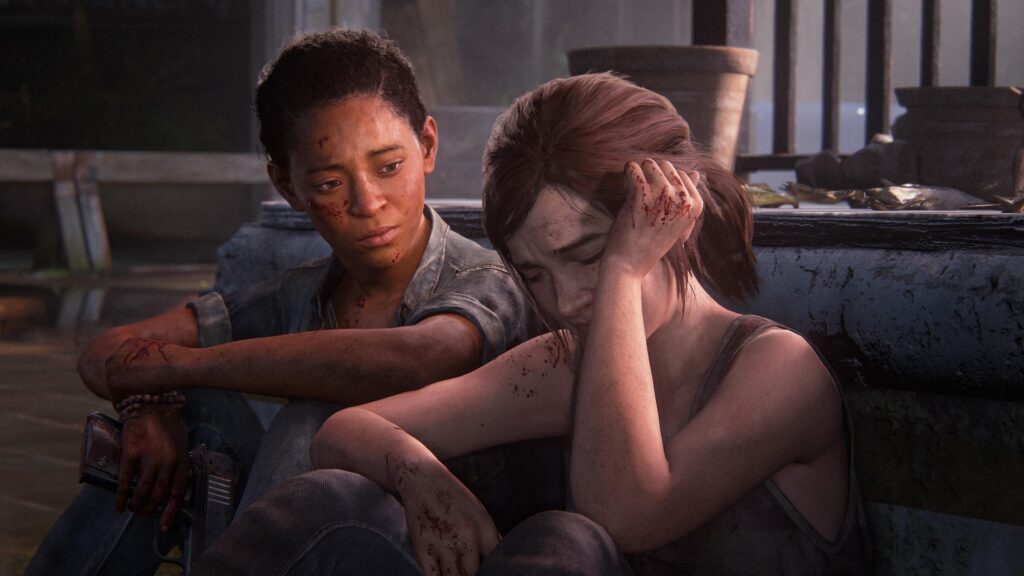
Ellie and Riley – The Last Of Us Left Behind
In The Last Of Us additional content Left Behind, we discover that Ellie is homosexual as we witness one of the only moments in Ellie’s entire life when she can finally let herself go, in a world where death is everywhere.
Although Tracer is an explicit sapphic character in Overwatch, controversy arose when it was explicitly revealed in the short story Bastet, that Soldier 76 had a past relationship with a man named Vincent. Some players couldn’t handle a very traditional masculine hero being revealed as gay while Tracer having a girlfriend fits into an existing cultural fetishization.
These characters carved space for queerness in our world when it still hesitated to name it. By being in different media than the main story, the developers made these backstories more intimate while not focusing on it, by not writing characters’ identity driven by their sexuality.
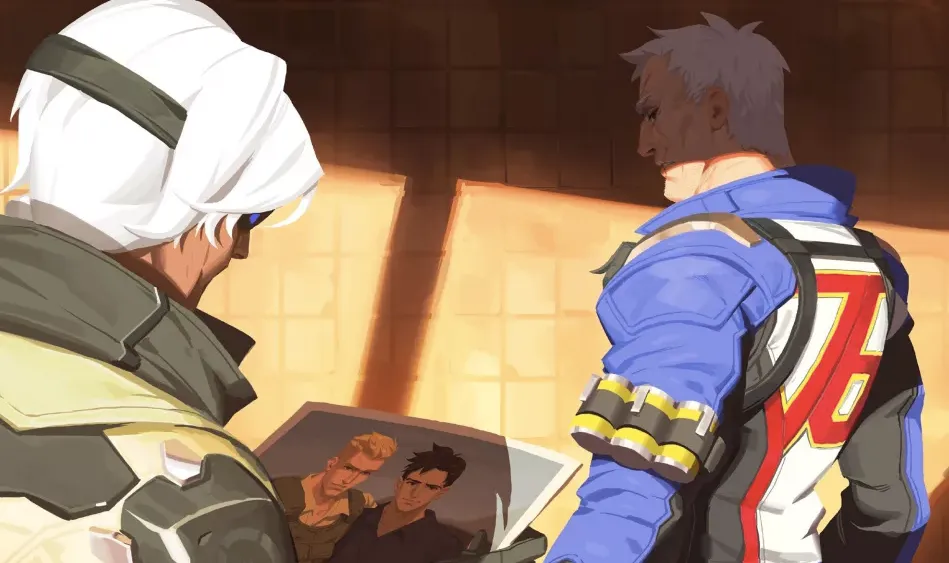
Soldier 76 – Overwatch
Then there’s Tyler from Tell Me Why, one of gaming’s first nuanced portrayals of a trans man. In the game’s story arc, Tyler learns to accept himself while avoiding the fall into toxic masculinity; that he wants to build his own story. The subtitles use “young Tyler” when referring to Tyler before his transition, never his dead name2. This is important as although his younger version and him are different, they emerge as one identity. Accepting his background as a player is what makes this character so enjoyable for the queer community but also people questioning themselves or knowing someone experiencing his tension. Tyler neither wants to be invisible nor eradicate his past. He simply wants to heal and become a better version of himself, for his past self.
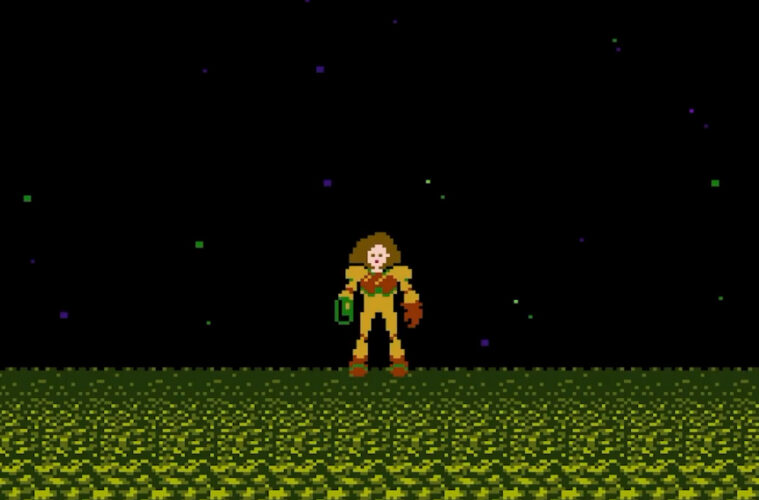
Another visibly queer and trans-coded character is Samus, in Metroid (1986). It is only at the end of the game where the gamer discovers that the armored character we have been playing was a woman all along. It was a smart move to make everyone play the game while not having misogynistic prejudice.
Video games are a mediation between the creator’s perspective and a player. For a few minutes, the player is obtaining a better understanding by living through the character. You need the story to feel real for them to experience. However, some representations can be harmful and give rise to stereotypes that bleeds to manifestations of discrimination in the real world. While other representations become depoliticized to fit and more check boxes.

Life Is Strange 2 – Episodes’ Covers by Edouard Caplain
Despite this, indie games choose more authentic representations. A well written story is prioritized over selling superficial social conventions. Among these games are Paper Please, which addresses the issue of population displacement, and immigration. While Fractured Minds and Sea of Solitude, assert that discussions about mental health can reduce the stigma surrounding it. These games don’t preach empathy, they make you feel it. They prove that storytelling rooted in lived experience is far more powerful than a token of diversity.
Video games can give us the tools for emotional survival in a world that often demands disconnection.
It is also a way to confront what some are not obliged to accept, but at least to understand.
As an Arab and queer gamer, I’ve learned to see this as a gift. Games let me imagine another way to be represented, and at the same time to question myself, to see from new angles, and to build a softer world inside a digital one.
During the last decades, diversity has been represented respectfully and past mistakes have been rectified by creating impactful figures. With characters being presented not for their differences, but rather, for who they are as people. Thus, it is evident through the previous examples, how the creator of a game can define and shape our minds and view on different groups of people. What matters the most now is calling the right people. Without them, representation risks falling into more stereotypes and fetishization.
With a wider audience than ever before, developers have a growing responsibility to explore real-life struggles. Industry productions share a common use of video games as a tool for reflecting on current issues, making video games the most cultural form of expression of the last century. Developers have a responsibility to “produce a game that looks at the world through an ethical lens”3 enabling people to reflect on their decisions.
- A narrative game in which the player’s choices will impact the story.
- Dead name: name before transition without specifying which one.
- Samuel Horty in his “Do video games have a social responsibility?“ article.