
Words by Gabrielle Antar
Photography by Mayar Attia and Mahrous Takes
This piece is a supplement within the “Fields of Gestures” issue
Life has had its hurdles lately, whether on a global level, with the constant anxiety of what the world holds for us, or on a personal level, just trying to make it as a queer Arab woman in a world that was not designed for someone like me to succeed. The weight of all of that can be a lot to carry, and I therefore gravitate to the little (but big) things that bring me joy. One of those things is drag, and when it’s Arab drag, even better. Feeling myself represented in all the glitz, glamour, and raw authenticity of an I don’t give an f energy recharges me like nothing else. It gives me, and a lot of other people, a little moment to have hope in what is possible and what can be.
When I heard about ADIRA’s second edition party and the iconic lineup they had planned, and the one-of-a-kind workshops suggested, coupled with my urgent need to leave Luxembourg and the torment I was experiencing, especially when it comes to a mainstream society rooted in individualism and laziness to do close to anything for us to have a better future, I fled for a couple of days to attend the festival.
I took my train ticket to Berlin in search of my community, in urgent need to be uplifted and validated in all of my existential crises. Even though I was eager and doubtful about what was possible, when it came down to it, it was even better than I imagined. Being surrounded by people like me, fragmented by the complex systems of struggle of being queer and Arab, it felt like I could finally breathe for a moment and that I’m not crazy: warmth and embrace are part of our culture, and Western societies try so badly to remove that from your being, but you resist it with all your power. And you embrace the queerness.
How ADIRA came to be
ADIRA is a new historical achievement for the Arab queer community. It is a first for the drag performers of our region to unite in one place and showcase the diversity of their talents.
“I first heard about ADIRA through social media and knew it as this fabulous queer Arab party happening in Berlin. When I learned that it had evolved into an Arab drag festival, it felt both necessary and long overdue. I’ve performed at several drag festivals around the world, but knowing there was finally one centered specifically on Arab queer artists felt incredibly meaningful. Seeing a space created for us by us was both powerful and deeply affirming,” said Anya Kneez, one of the performers of the festival’s second edition.
Indeed, ADIRA started off as a queer Arab Barty, insisted Hassandra, the co-founder of ADIRA, drag queen, host, and DJ, but then it died out due to COVID in 2022. Hassandra then worked with the now other co-founder Zuheir, also known as the DJ Xanax Attax, and created the first Arab drag festival.
“The festival started from a simple need. There were almost no spaces where Arab drag could exist on its own terms, without adjusting to a Western gaze, without being explained or softened. Many of us were trying to fit under umbrellas that did not always feel safe. My drag is experimental and often vulnerable, so creating a setting that could hold that felt important. The idea was to build a space where our references, our humor, our politics, and our emotional worlds could stand as they are,” Hassandra explained.
The name of the self-organized club night series, ADIRA, comes from an Arabic slang term originating from Levantine queer culture describing a strong presence, someone who is capable and successful. “ [… It] came from wanting to avoid anything that repeated orientalist framing. We looked instead for words that speak to us in coded ways, that carry meaning inside our own communities. [… It had] a sense of strength that we liked,” said Hassandra.
The visual identity had the same intention. “Imad [Gebrael] designed with purpose, creating a culturally inspired mark that combines lettering with illustration and speaks to Arabic-speaking audiences without relying on a stereotypical orientalist aesthetic,” they said.
Experiencing ADIRA
ADIRA has released only two editions of its drag festival, but the word has already spread throughout the Arab queer community.
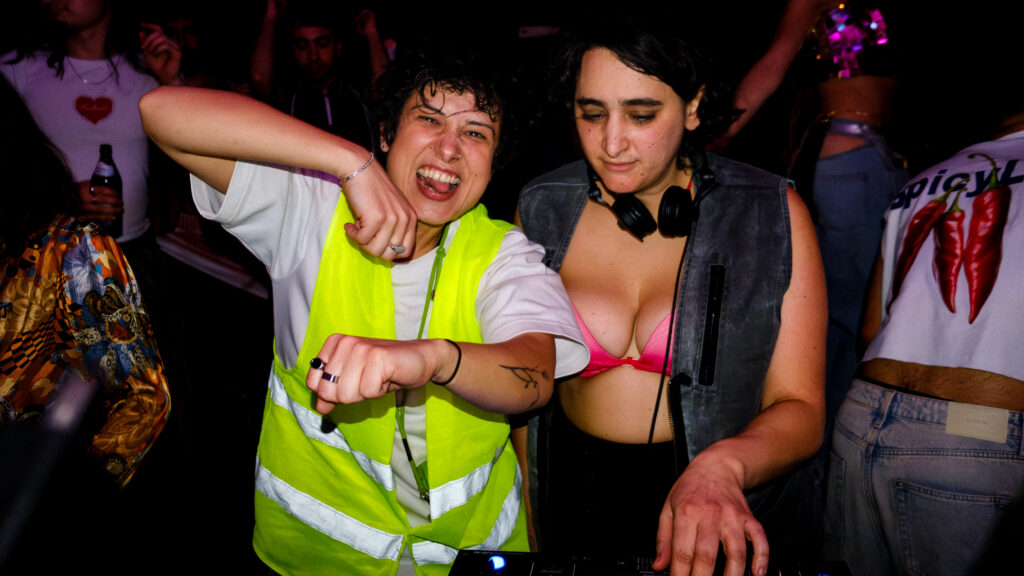
“I really wanted to be part of the community, that is why I was driven to go. The first edition was good and something new. So, I decided to also attend the second edition,” said Firas, a queer Tunisian who traveled four hours back and forth to Berlin from the town he lives in to attend the workshops and party because he wanted “to learn more about the art and culture” behind queer Arabness. Firas came out later in life and wanted to fully take in the culture and his identity, so ADIRA was the place to do it.
Photography by Mahrous Takes
When I attended the workshop, the diversity of Arab people and the fact that most of the attendees were not from Berlin really shed light on how much this is needed and sought after by the community. There was an immediate ease and familiar bond between the attendees of the workshops, I would say. Something I had never felt before, because nearly everyone came on their own and with the intent of connecting with members of the community.
“You guys are what brought me joy,” said Firas when asked what brought him the most joy during the workshop.
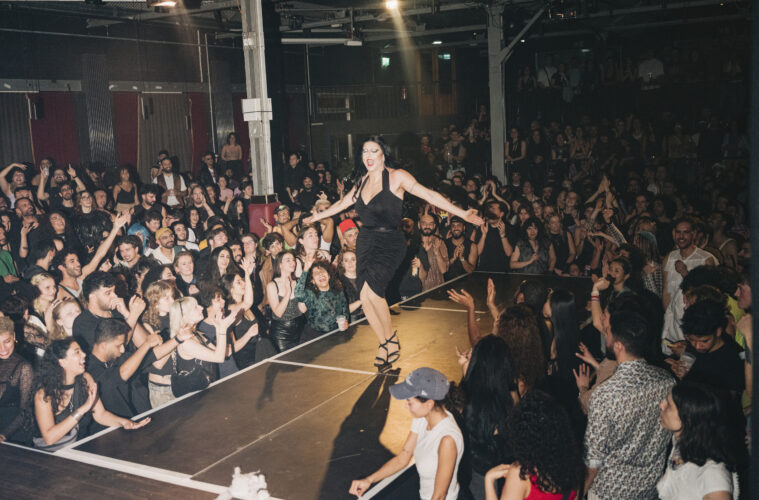
The festival was something I had never seen before. Although growing up in Beirut, I witnessed a lot of drag performances. The choice of the performers representing different ways of doing drag across the Arab world was bewildering and beautiful to see. Performers from Tunisia, Yemen, Lebanon, Egypt, Iraq, and more all came to showcase their talent to an even more diverse audience.
“We select artists by keeping an ongoing network of performers we know or are curious about, and we watch for new voices. The lineup always mixes people who have been doing drag for years with people who are taking their first steps. Giving space to newcomers is important, especially for those who are interested but hesitant. We also look at range, so the program does not lean toward one region or one style. The aim is to show the range of Arab* drag as it exists today,” Hassandra told My Kali about their intricate process in setting up the show.
Hassandra said she builds connections among performers through mandatory pre-festival sessions in which they exchange ideas and feedback. The aim, they explained, is to create a collective process rather than a series of separate acts. She also works one-on-one with performers to refine their concepts. By show time, the group has a shared foundation that helps them support each other on and off stage.
Even though they prioritize drag kings in their open call, the number of drag queens heavily outweighed the number of drag kings, with only two of the performers of the second edition being drag kings. “Obviously the percentage is unbalanced,” said Hassandra. “It’s more also that men and male identifying individuals tend to dominate queer spaces more and that is a fact,” they added.
The second edition’s theme was Arab futurism, allowing performers to blend art and storytelling to re-envision the future from an Arab perspective, often challenging colonial narratives and creating space for liberation and self-definition. It was a reclaiming of Arab pop culture and key cultural references from the region.
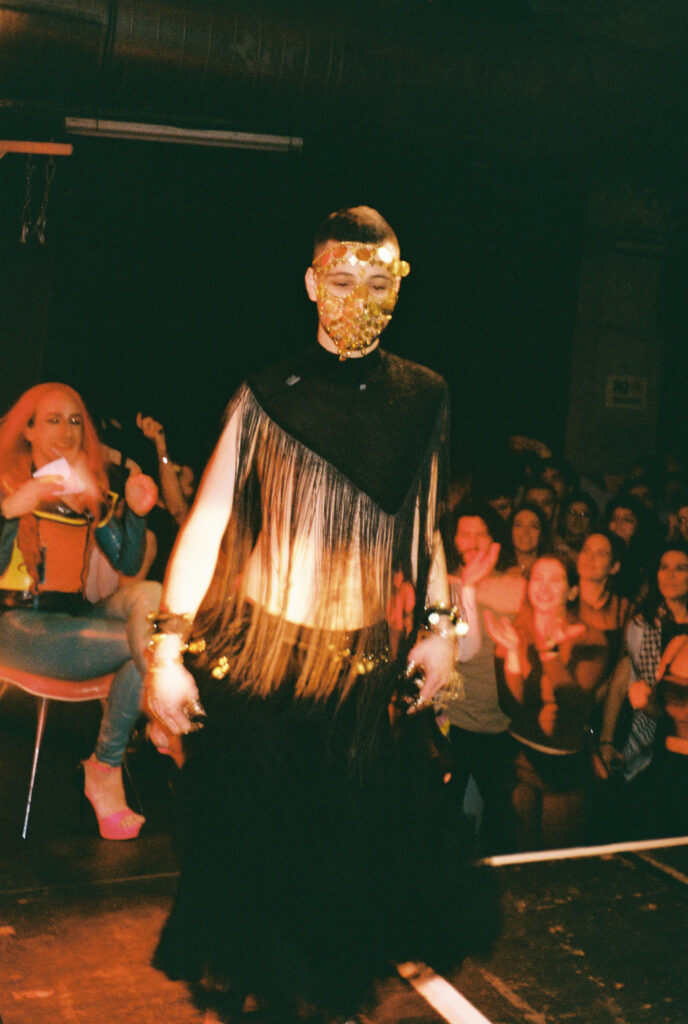
“Pop music is central because Arabic-pop culture, especially from the early 2000s, carries so much queer coding. Many of us grew up reading between those lines. There is a lot in that era that can be reclaimed, re-read, and reshaped on stage,” said Hassandra. As a spectator, you saw a take on traditional belly dancing but also references to Arab divas like Haifa Wehbe and Nancy Ajram, and you could tell the crowd was living for it and eating up every little reference brought to you on stage. For example, jinn boi, an Egyptian drag king, performed the song Bakrah Israel by Shaban Abd El Rehem, an iconic song that regained notoriety with Arab communities due to the ongoing genocide in Gaza and its violent colonial oppression of Levantine territories.
Jinn boi describes what they loved most about performing with ADIRA, only their third time on stage, though you’d never guess it. “There were so many people in the audience who understood our context and who were Arab. That’s incredibly important to me when I perform in Europe. I felt like a pop star. My favorite moment was after I came off stage. I didn’t really know how I’d done… and then I started talking to people in the crowd. The feedback I got, from friends and strangers, was so specific and nice.
It’s powerful to have an audience that’s aware and truly invested in drag. I love how ADIRA pushes the boundaries of what drag can be. There were so many different kinds of performances in the show, whether personal, social, or historical. I learned so much just by being part of it,” they explained.
“It was one of the best audiences I’ve ever performed for. I don’t always get the opportunity to perform for Arab queer audiences who fully understand my cultural references, or my niche humor, but the ADIRA crowd knew EXACTLY what I was serving on that stage. When I did my Najwa Karam mawaal paired with a spoken word moment of her teaching us how to Takadom is not something every audience would grasp, but the Adira audience not only understood it; they were living for it!,” said Anya Kneez, who gave, in addition to that, an iconic take on Nancy Ajram’s Ah w Noss, ending with her taking out of a basket a big cloth with “Free Palestine” written on it.
All of these examples, too many to cite individually, highlighted a clear trend of referencing the past to envision a future, Hassandra pointed out. The drag queen chose to pay homage to her mother in one of her performances. For her, the concept of futurism is but an extension of her mother. “What is queer futurism but reconciliation with our parents and our families? […] What is the future if it is not going back to the past?” And this is what a lot of performers did: they imagined a future by reclaiming the past, she explained.
The challenges
ADIRA takes place in Berlin, the capital of a country that has been one of the biggest supporters, financially and politically, of Israel’s genocide in Gaza and the occupation of Palestine. They have also been the second biggest supplier of arms behind the United States.
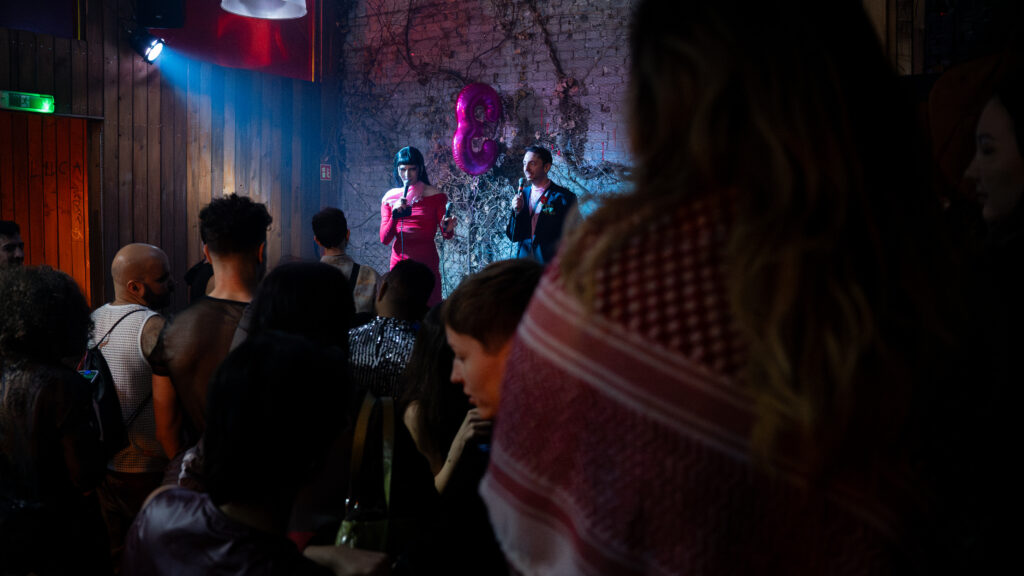
“Living and working in Germany today means constantly navigating the blurred lines of what can be said or done and what crosses an invisible boundary. Having been in this environment for a long time, you develop a sense of how far you can go, even though true certainty never exists. At the same time, many Arabs carry their own histories of censorship, which – ironically – equip them to continue and speak out within restrictive or oppressive contexts. This learned experience gives you a better sense of your freedom and restriction of speech,” explains Hassandra.
Photography by Mayar Attia
“For us, joy is tactical. It is a way to make whole what political violence tries to break, to insist that our lives, our loves, and our cultural histories continue to exist loudly and unapologetically,” she told My Kali.
ADIRA was never just a party but a space for care, community, and cultural memory, where visibility itself becomes an act of defiance. At the same time, the collective faces constant pressures around funding, logistics, and politics; balancing financial survival with ethical commitments, navigating visas and cross-border barriers, and managing backlash in a tense public climate, in addition to feeling undermined and disrespected by venues.
“Another practical challenge is emotional labor. Holding space for a community that carries trauma, and organizing public-facing cultural work during times of mass violence, means the team and performers often provide mutual support beyond the show: running workshops, hosting conversations, and creating safer spaces backstage. That labor is necessary,” adds Hassandra.
Queer Arab performance as both art and resistance
Western society, in its colonial attempt to pinkwash us, has promoted the idea that queerness and Arabness cannot go hand in hand, a false narrative that has not only affected people’s safety in expressing their identities in their home countries, due to the remnants of the colonizer’s laws that outlaw queerness, but has even been used to justify the genocide of the Palestinian people.
“Initiatives like ADIRA are incredibly significant for our existence. Simply creating a space where queer Arabs can gather, feel safe, and experience community is a form of resistance in itself. From personal experience, when we began doing drag in Beirut, it started very much underground. We infiltrated the nightlife scene from within, and as we continued to produce shows and events, the outside world began to take notice. It wasn’t through protests or riots; it was through the art form of drag. […]
As Arab queers, our existence alone is an act of resistance; and it is our responsibility to help shape a future that younger generations can finally see themselves in. ADIRA is one of the initiatives doing exactly that; transforming visibility into a future younger Arab queers can be proud of,” said Anya Kneez.
Jinn boi sees ADIRA’s work as a model for both drag and community-building among queer Arabs. They say ADIRA strikes “a good balance of being in diaspora but also being aware of what’s happening outside,” and view drag as more than entertainment.
For them, drag is also political. “People like to have fun, at the same time drag is not just for fun,” they say. Even serious themes, jinn boi adds, can be made compelling on stage. What makes drag powerful, in their view, is its ability to turn vulnerability into connection. By embodying exaggerated personas, performers expose what they want to advocate, and audiences identify with that.
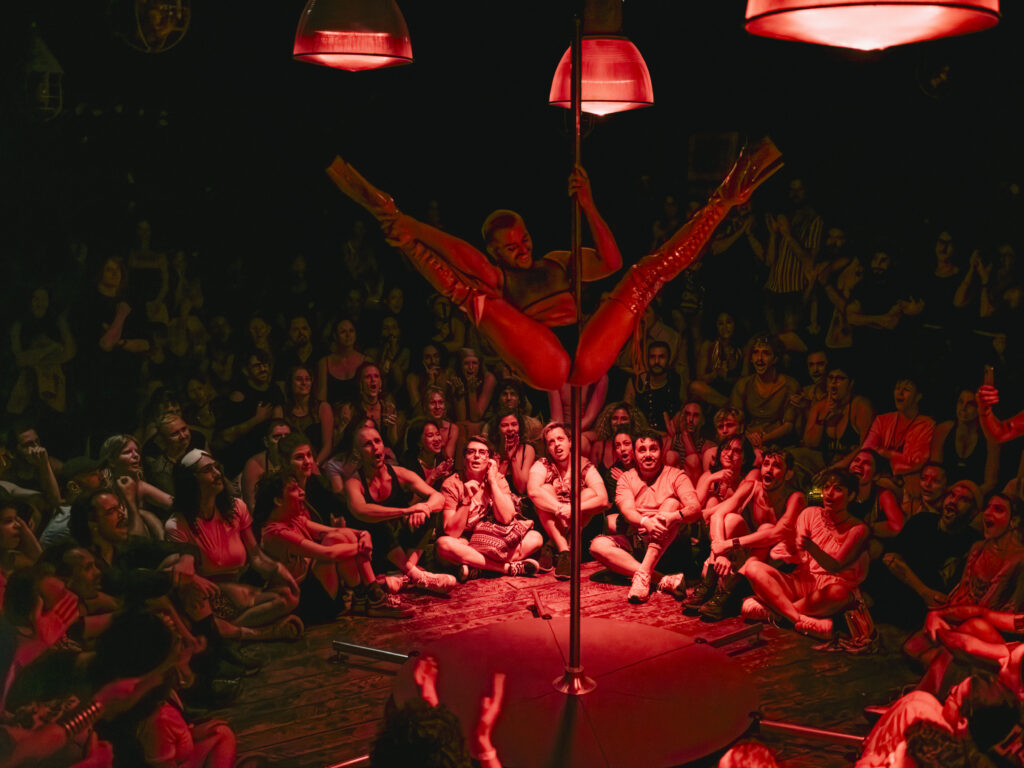
The festival acts as a living archive of queer Arab existence, preserving histories and experiences that official narratives often erase. It offers vivid examples of art as resistance: bodies become sites of defiance, performance becomes testimony, and glamour becomes a strategy for defiance. More than a celebration, ADIRA shows how artists reclaim narrative power through visibility, collaboration, and the courage to organize.
“We exist to resist oppression and harassment. We exist to support people like us. People tell me I’m lucky to be open in Germany. And yes, I am, but I would rather live in my own country, with better laws and opportunities, than be here. The far right is rising, and there is homophobia. To say that queer immigrants exist here, and that we belong to the entity called Germany, is itself an act of resistance,” said Firas, one of the attendees of the festival.
Hassandra concludes by telling My Kali how “in times of crisis and uncertainty, colonial “divide and rule” tactics often intensify, further weakening marginalized communities. ADIRA refuses this fragmentation. Our aspiration is to continue building a community space where different groups can come together, feel seen, and find a place they can genuinely call “home”. We hope the festival continues to grow bigger and inspire more people to use drag as a tool for resistance and act of self-loving.”
By the end of the festival, Hassandra, one of the evening’s hosts, explained that the hope behind putting the event together is that someday we might experience something like it in our own countries. And, by Haifa Wehbe, I’m holding onto that hope.