
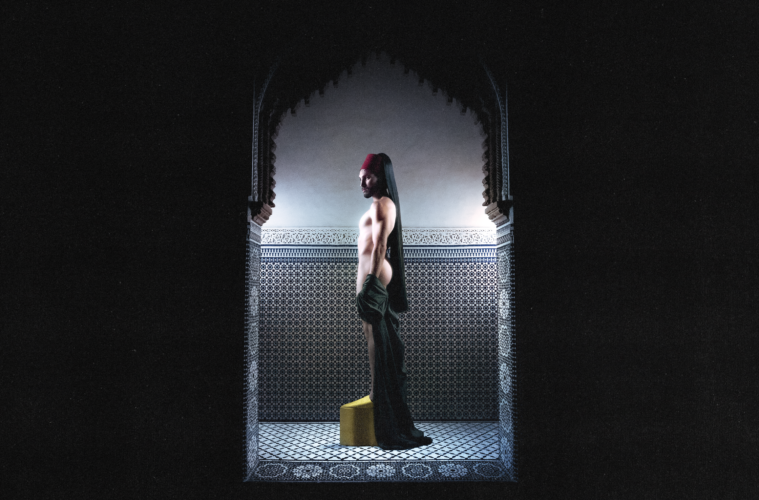
Photography by RENAISSANCE, and El Mehdi (featured image)
New Vibes/اجواء جديدة gives a snapshot of emerging and established independent, experimental, and underground sound artists and projects in their own words <3
El Mehdi (he/him) is a Moroccan-Canadian singer, songwriter, and multidisciplinary performer blending contemporary art-pop with North African traditions. Ceremonial, defiant, and cathartic, his work explores identity through symbolism, unapologetic presence, and cinematic storytelling. Moving between English, French, and Darija, he creates expansive, immersive worlds where pop meets ritual, and music becomes sanctuary.
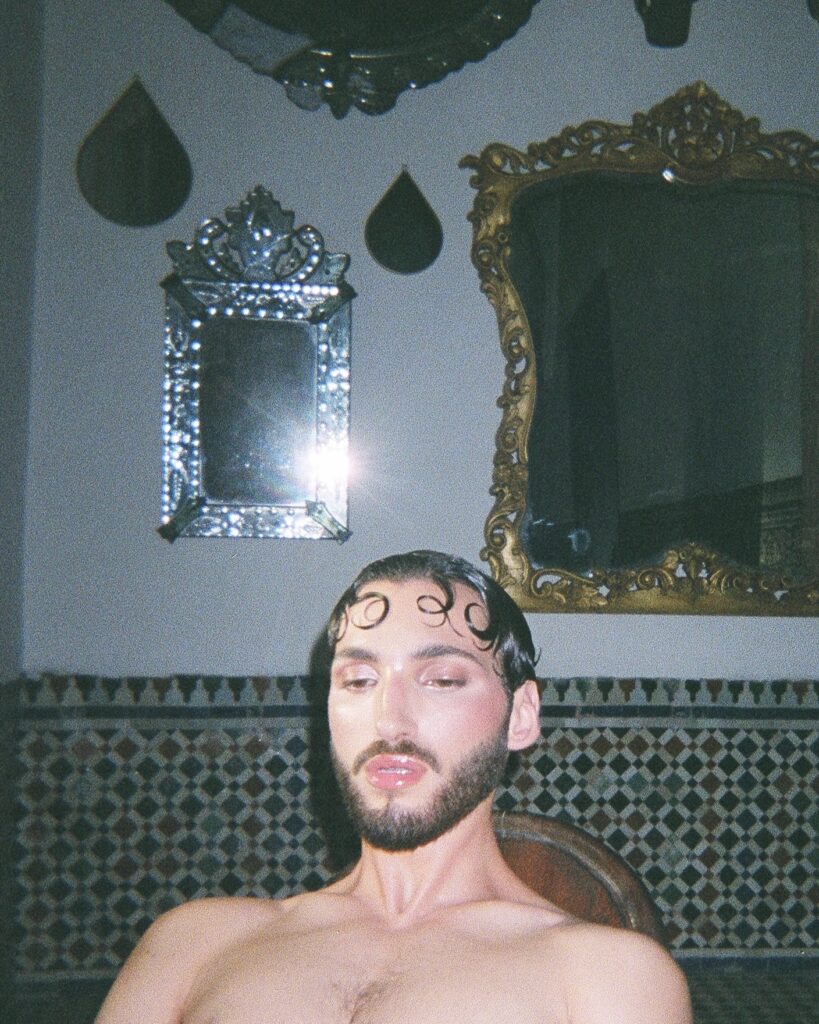
Tell us a bit about yourself… How would you introduce yourself?
I consider myself a multidisciplinary artist. Music is at the center of what I do, but my work also extends into image, storytelling and performance. Sometimes a single word can inspire an entire universe. Sometimes it’s an image, a melody, an emotion, an aspiration or a memory. When I write a song, completing it means also shaping it into a form that allows it to be fully experienced. It’s multidimensional, multi-sensory. Mostly, I aim to create a universe where the tension between opposing realities transforms into harmony.
How do you describe your sound?
It’s hard to define, but it’s definitely rooted in pop. There are many layers, different, often contrasting influences, styles and textures, all reflecting the diversity of what I grew up with. I engage with themes like identity, belonging, nostalgia, hope, empowerment, desire and the sacred. Sonically, I like to work with traditional elements, but I try not to confine them to their original context. I approach music the way I like to approach the world: without labels. I’m also a big fan of cinematic atmospheres and arrangements, from orchestral strings to layered vocals.
Can you tell us about your latest project, and what you’re looking forward to?
I just released my debut EP, SALAM, along with a visual short called El Film. For me, this is my introduction, my salam to the world.
With this project, I’m no longer sacrificing parts of myself. SALAM comes from a journey of self-discovery and assertion. I want to show how rich and expansive our culture can be when it’s inclusive and allowed to grow alongside us. That there’s enough space for all of us. It’s about being unapologetically proud while staying deeply rooted.
On a professional level, I look forward to continuing to create, connecting with people, and bringing this work to life on stage. More broadly, I look forward to acceptance, connection and growth. Both personal and collective.
What is one of the tracks that you connect with the most, at the moment? Can you tell us more about it?
At the moment, it would be SKIN. Most of the EP comes from a more confident place, but I wrote SKIN when I felt very powerless. Listening to it now reminds me how far I’ve come and gives me a sense of hope. The song is about a strong desire to transform, almost to step outside of myself, but at the time, I still believed that change had to come from elsewhere.
Years after writing the song, I added the outro. A Gnawa troupe repeats “daba, daba” meaning “now, now” in Darija. For me, it was a way of affirming that the change I had been waiting for is happening now. A way of taking back power, of choosing how the story ends (or begins).
I chose a Gnawa troupe for its spiritual dimension. Gnawa music is rooted in ritual, trance and healing, using repetition and rhythm to open space for transformation, which is what I’m seeking in the song. But it was also because many of the internal voices I grew up with that made me doubt myself were male voices. Writing lyrics and hearing them sung by men today felt like a reversal of that dynamic, like deciding what those voices get to say now. Once again, it’s about taking control of the narrative.
What are you listening to these days?
My playlists are really eclectic. What I listen to varies depending on the vibe or what I’m doing. But most recently, I discovered Cain Culto and I absolutely love his sound and vision. I’ve also been listening to the SUNSET BLVD musical album. The music is majestic. Beyond that, Melanie Martinez’s albums are usually on repeat. Her latest HADES was much needed in my life right now.
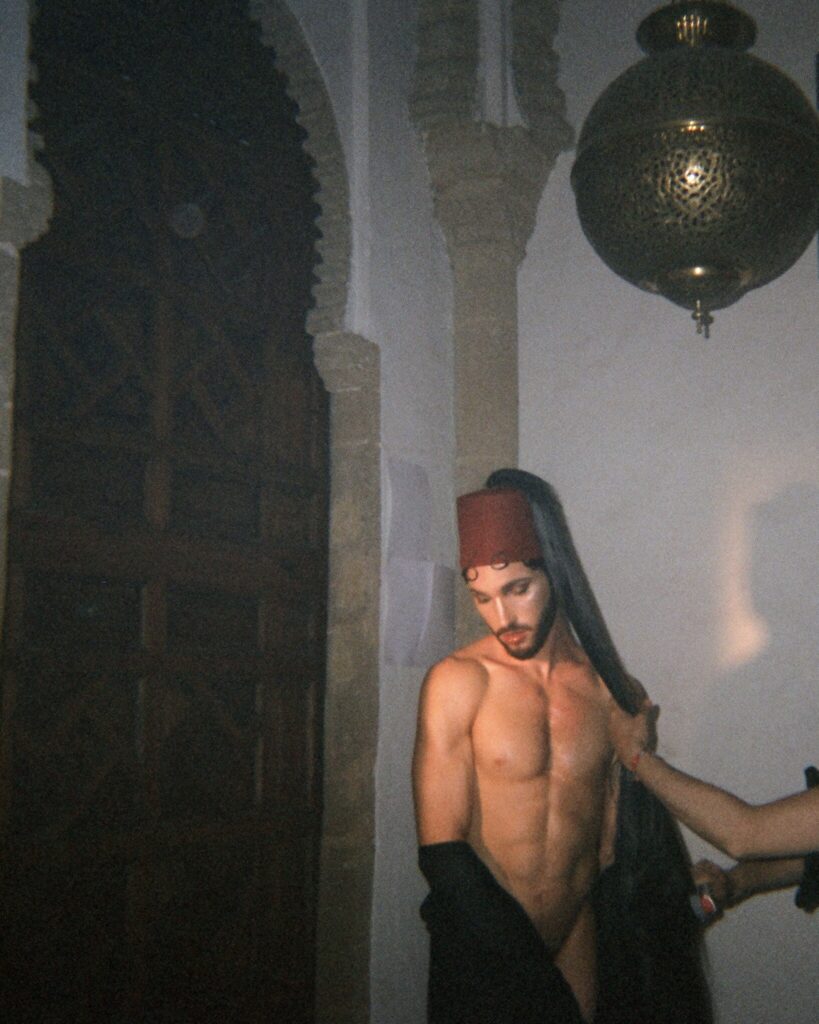
As a Moroccan, how do you navigate your sexuality within your cultural identity?
Being Moroccan, North African, Arab, Muslim or from a Muslim background shouldn’t automatically come with imposed notions of modesty. It took time, but I’ve reached a place where I feel at peace with my body and sexuality. I’m not saying everyone must feel the same to be “liberated.” Liberation is the freedom to choose how you express yourself, what you do or don’t do with your body, what you reveal, what you keep to yourself. Choice is everything. And I believe real change can only begin once we collectively accept and respect that.
I grew up being taught that my body belonged to God. That I didn’t have full autonomy over it. Internalizing from a very young age that your body isn’t fully yours can create distance, not only from your community, but from your own self. That’s my experience.
My journey has been about moving from fear to ownership, from shame to agency. I’m not here to redefine liberation for everyone. I’m simply claiming it for myself and those who might experience it the same way.
When cultural symbols intersect with sensuality, conversations often shift to orientalism or “Western influence.” How do you navigate those interpretations?
Through my work, I assert autonomy over my body, my sexuality, my narrative and equally over my heritage. I engage with symbols that have been part of Moroccan culture for centuries and remain so today. I’m not the first to reinterpret them and will not be the last. If these symbols only become controversial when connected to forms of expression that don’t align with certain moral or religious expectations, then the conversation is no longer about culture, but about who is allowed to embody it and how. Access to culture becomes once again conditional.
If at a surface level my merging of heritage and sensuality recalls orientalist imagery for some, should that force me to alter my expression? Should Moroccan artists lose their freedom of self-representation and abandon certain visual languages because they were once appropriated and distorted by colonial gazes? If colonial projections still define the limits of our expression or how we choose to engage with our own culture, has autonomy truly been restored? For me, autonomy and self-authorship mean having the freedom to define and express ourselves on our own terms.
Reducing queer or sensual expression to something “Western” reinforces the idea that such expressions are foreign to our culture. When difference is treated as external rather than as part of our own diversity, it becomes a refusal to cultivate it at home.
Find more of El Mehdi’s work on Instagram, YouTube, Apple Music and Spotify.