
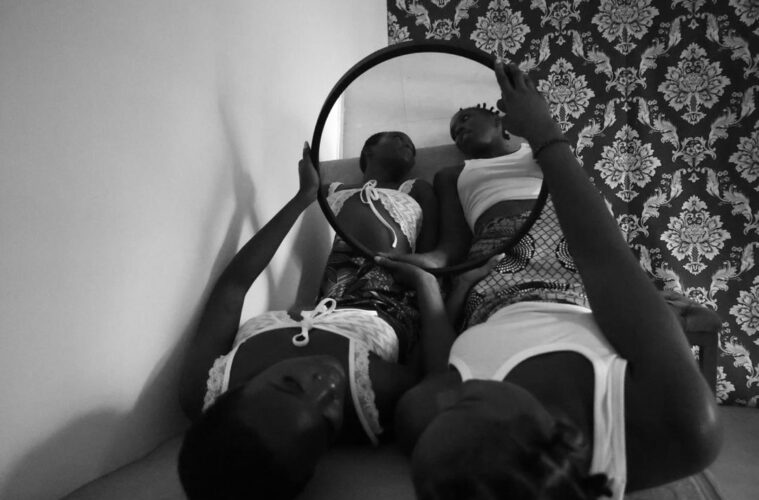
Words by Etseoghena Aliu
Photography by Rachel Seidu
This piece is part of the “Fields of Gestures” issue
When marginalized communities warn that their oppression signals a larger collapse, they are not being dramatic. They are reading the blueprint. The bombing of Sokoto on Christmas Day 2025 has done nothing to protect Christians, Muslims, or anyone caught in Nigeria’s worsening insecurity. Yet the rhetoric persists: “Christian genocide by Islamic terrorists.” The framing is deliberate, as it erases complexity, flattens violence into religious binaries, and distracts from what the state will not name its own failure to protect anyone at all.
The state turns citizens against each other by refusing to address systemic collapse. Sexuality, religion and ethnicity become the scapegoat. However, the targets rotate, but the logic remains constant. Blame the margins for what the center will not fix.
I analyze how this governing logic operates, how it has been perfected over decades, and why queer communities, particularly queer women, were among its earliest testing grounds. The connection I am drawing is structural, not metaphorical. The same mechanisms used to pathologize lesbian desire in early 2000s Nollywood are now deployed to frame entire religious communities as existential threats. Both serve the same purpose: to distract from extraction, poverty, and state abandonment by making marginalization look inevitable, even deserved.
Nollywood did not invent this logic, but it taught Nigerians how to accept it. These were not experimental films screened in Lagos art houses. They were sold in markets across the country, watched in family living rooms, discussed in churches, referenced in everyday conversation. Millions of Nigerians consumed these narratives as entertainment, absorbing a lesson that would prove adaptable far beyond questions of sexuality: certain people are not oppressed by systems but are symptoms of systems breaking down. Their existence is the problem. Their visibility is the contagion.
The question is not whether Nollywood intended this. Rather, the question is what the films achieved regardless of intent.
Old Nollywood and the Language of Vice
In 2003, Dakore’s character whispered to Stephanie Okereke in Emotional Crack: “Vanity is my vice.” That single line contained old Nollywood’s entire philosophy on lesbian desire. Not love, not identity, but vice. Lesbian intimacy was refuge for women failed by men, but even that tenderness was pathologized as madness. The diagnosis was clear: this is what happens when women look elsewhere for what men could not provide.
The film condemned the characters, but the chemistry between them lingered. Love between women existed only as a reaction, never as a choice. Yet within that reaction was truth. These women reached toward each other because of need, for care, understanding, and survival. The camera condemned them, but it also archived something the moralizing could not entirely erase.
White Angels (2005) collapsed feminist solidarity and lesbian desire into one forbidden force. The female cult functioned as sanctuary and trap. Stephanie Okereke’s character confessed her love for Ini Edo’s “Natasha,” only to become the villain when rejected. The film tried to punish these women, accidentally archiving moments of female intimacy rarely seen onscreen: laughter in shared bedrooms, longing glances mistaken for rivalry, the charged proximity of affection and power.
Mr. Ibu and Keziah (2004) turned the quiet part loud. Feminism became contagion. The “angry feminist” rejected male authority and was punished with lesbian “infection.” Queerness became a metaphor for independence gone too far. Through comedy, the film dramatized male fear: that once women think and live for themselves, they will stop needing men entirely. The joke was the threat, and the punchline was control.
These films embedded a logic that would prove to be adaptable. The lesson was simple: certain people are not oppressed by systems but are symptoms of systems breaking down. The same framing that turned lesbian desire into individual pathology would later be applied to religious difference, ethnic tension, and political dissent.
The Pattern Repeats: From Sexual Deviance to Religious Threat
The logic that framed lesbianism as contagion now frames Muslims as terrorists and Christians as victims of genocide. Both are used to distract from what the state refuses to address: insecurity born of economic collapse, political abandonment, and decades of extraction.
When Boko Haram emerged, the state blamed “Islamic extremism” rather than its own failure to provide education, employment, or infrastructure in the North. When the economy crashed, the culprit was “corruption,” not structural adjustment programs and neoliberal policies that gutted public services. When international pressure mounted over human rights abuses, the state blamed the “Western LGBT agenda” for imposing foreign values.
Religion is now the facade, just as morality was the facade in old Nollywood. Both allow the state to avoid accountability by pointing elsewhere. The violence is real, as many Christians have been killed. Communities have been destroyed. But framing this as “Christian genocide by Muslim terrorists” erases the material conditions that produce insecurity for everyone. It creates a false binary that benefits only those who profit from division.
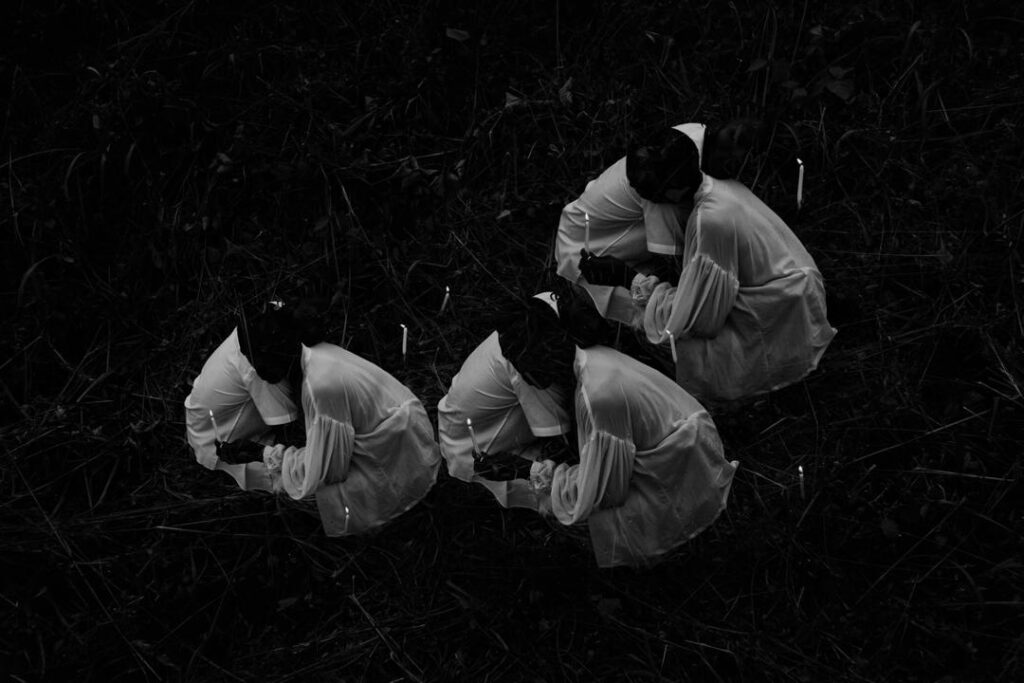
Photography by Rachel Seidu
Religious fundamentalism and the performance of moral panic serve the same purpose: keep people marginalized, frightened, and focused on each other rather than on the systems extracting their labor, resources, and futures.
Queer oppression mirrors this dynamic because it is part of this dynamic. The 2014 Same-Sex Marriage Prohibition Act was not passed in a vacuum. It followed years of economic instability, political unrest, and mounting criticism of government failure. When international organizations began pressuring Nigeria on human rights, the response was swift: criminalize queerness and blame the West for interfering. The law gave agencies like the National Film and Video Censors Board legal authority to enforce anti-LGBTQ policies with state backing, transforming cultural taboo into criminal offense.
The gendered layer matters as gay men were framed as the “bigger sin” because their existence threatened masculinity, lineage, and the symbolic power of men. Lesbianism, however, was dismissed as temporary deviation, a phase born of heartbreak or madness. This is why lesbian narratives were treated as less serious, even invisible, in mainstream storytelling. They were not seen as a crisis worth criminalizing until queerness as a whole became useful as political scapegoat.
It is often repeated that no one is free unless all are free. Queer liberation is not separate from broader struggles against state violence, economic extraction, and systemic neglect. Queer oppression is a microcosm of how the state governs: by making certain lives expendable.
2014 and the End of Compromise
Before the 2014 Same-Sex Marriage Prohibition Act, old Nollywood filmmakers could frame queerness as cautionary tale and still circulate their work. Moralism was the cover. Condemnation was the price. The system allowed compromise, however distorted, because the films reinforced the social order even as they documented what they claimed to condemn.
After 2014, that loophole closed. Cultural taboo became criminal law. The NFVCB gained legal authority to block any film featuring queer relationships. As the head of the board stated in September 2020, “There’s a standing law that prohibits homosexuality, either in practice or in a movie or even in a theatre or on stage.” The threat was explicit. The consequences were real.
When queer relationships do appear in mainstream Nollywood now, they are tokenistic, sensationalized, and disposable. The brief, out-of-place kiss between women in Merry Men (2019) exemplifies this: context-free, played for shock value, ultimately meaningless. It was not representation; it was a spectacle designed to provoke without challenging oppression.
Old filmmakers worked within constraints. Today’s queer filmmakers are locked out entirely. No amount of moral framing will grant them access to cinemas or mainstream platforms. The system that once allowed distortion now allows nothing at all.
Forced Self-Reliance: Building Outside the System
Queer cinema in Nigeria mirrors the condition of Nigeria itself: forced self-reliance in the face of systems that either do not exist or actively work to make survival impossible. As such, when the state refuses to protect, communities build their own infrastructure. When mainstream industries close their doors, artists create alternative networks.
In 2020, Ìfé, directed by Uyai Ikpe-Etim and produced by Pamela Adie under The Equality Hub, became Nigeria’s first feature-length film centered entirely on a lesbian love story. More importantly, it portrayed that love positively. The NFVCB swiftly threatened to track down the filmmakers, warning that they “knew what to do” if the film was distributed without approval. Executive Director Adedayo Thomas claimed both Adie and Ikpe-Etim could face prosecution for “promoting homosexuality.”
The film premiered anyway. Online and internationally. It sparked conversations that reframed queer storytelling beyond morality. Pamela Adie explained in an interview that the film’s purpose was not to shock but to normalize, to show that love between women is ordinary, intimate, and human. Ìfé became proof of possibility: that lesbian characters could exist as protagonists, and their love could be seen as tender rather than tragic or scenes of provocation.
The ecosystem that emerged after Ìfé demonstrates what survival infrastructure looks like. TIERs produced Hell or High Water (2017), a short film exploring the trauma imposed by the 2014 act, and later the web series She He They (2024). Ayo Lawson’s Unburied (2024) was nominated at the Toronto International Nollywood Film Festival. Nengi Nelson and Nosazemee Agbontaen’s Ixora (2022) screened at Kurzfilmtage Winterthur in Switzerland. These films circulate through festivals, streaming platforms, and community screenings, spaces built outside the systems that exclude them.
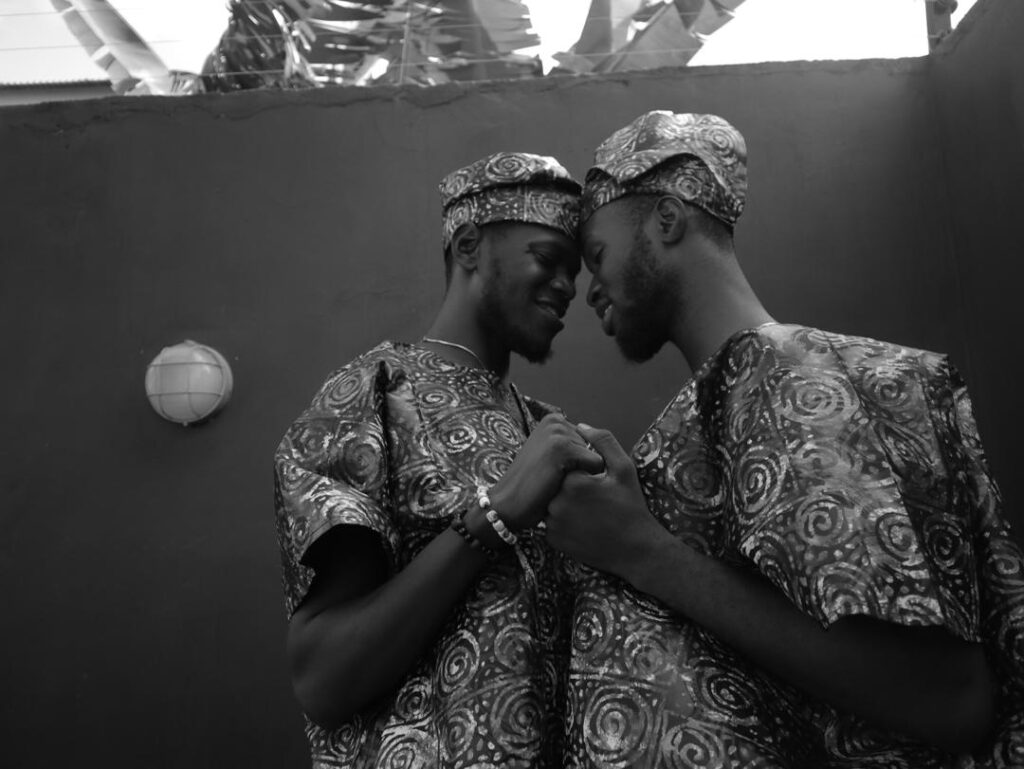
Photography by Rachel Seidu
But sustainability remains fragile. Nosazemee Agbontaen describes the challenge: mainstream Nollywood thrives on capital from investors seeking profit, investors who will not touch queer films in a market where they are illegal. Even internationally, queer filmmakers face unequal footing. Films must be exponentially better to secure funding. Many filmmakers pay their own way to festivals while their straight counterparts arrive funded. Submission fees pose another barrier for filmmakers already marginalized and underpaid.
Streaming bypasses geographic restrictions and reaches global audiences without traditional gatekeeping, but it does not resolve the fundamental inequity. Queer filmmakers operate in a restricted market where their work is criminalized at home and must work exponentially harder abroad to secure the same opportunities their straight peers receive with less effort. These avenues sustain stories, but relative sustainability is not equity. The margins remain margins, even when they are digital.
The Cost of Ignoring the Margins
In October 2020, during the #EndSARS protests against police brutality, young Nigerians flooded the streets demanding accountability and an end to state violence. Queer activists were part of that movement, organizing, protesting, and demanding justice alongside everyone else. When queer people tried to shine a light on the specific violence: harassment, extortion, and abuse under the same systems brutalizing all Nigerians, the response was swift and vicious. Online and offline, queers were met with vitriol and violence. The solidarity fractured and the movement became splintered.
This is what happens when marginalized communities are dismissed as distractions rather than recognized as frontline indicators of systemic failure. The issues facing queer Nigerians are not separate from the issues facing all Nigerians. Police brutality, economic collapse, government corruption, and insecurity, these crises do not discriminate. But the state has taught us to see certain communities as expendable, certain struggles as less legitimate, certain lives as less worthy of protection.
The bombing of Sokoto has proven what queer communities have been saying all along: scapegoating does not save anyone. Blaming Muslims does not protect Christians. Criminalizing queerness does not strengthen families. And dividing communities does not build nations. The rot spreads regardless.
If we cannot unite as a people to stand against oppression in all its forms, we will always fail. We will always lose. The systems that abandon queer people today will abandon everyone tomorrow. The governing techniques perfected on the margins will eventually reach the center. This is not a metaphor. This is a pattern.
Archive and Refusal
Old Nollywood’s flawed depictions of lesbianism were both harmful and revealing. They reflected fear but also exposed longing, the need to be seen even if distorted. The films condemned their queer characters, but they could not erase them entirely. Intimacy was preserved, solidarity was documented. And importantly, the archive remains.
Today’s filmmakers work under harsher conditions. The 2014 act transformed cultural taboo into criminal law, giving state agencies legal authority to punish visibility itself. Where old Nollywood could hide queer narratives inside moral frameworks and still access distribution, contemporary filmmakers are locked out entirely. The system that once allowed compromise now allows none.
Yet they choose visibility anyway. They build outside the systems that exclude them. They create infrastructure where the state offers none. Every film is a refusal. Every screening is resistance. Every story told is survival.
When the state fails to protect, communities protect themselves. When industries close their doors, artists build new ones. When visibility is criminalized, the archive becomes a form of keeping each other alive.
Even as the camera condemned us, the archive remains. We’re still here and queer, not in spite of the system but because we refuse to let it erase us.