In conversation with Camellia Boutros
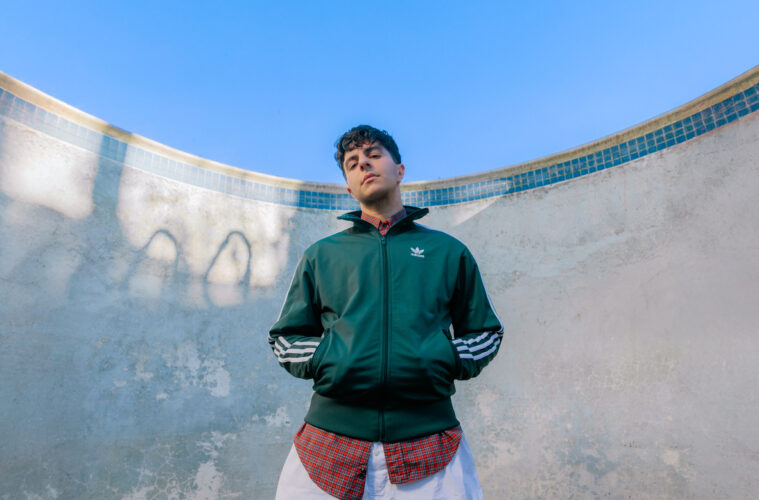
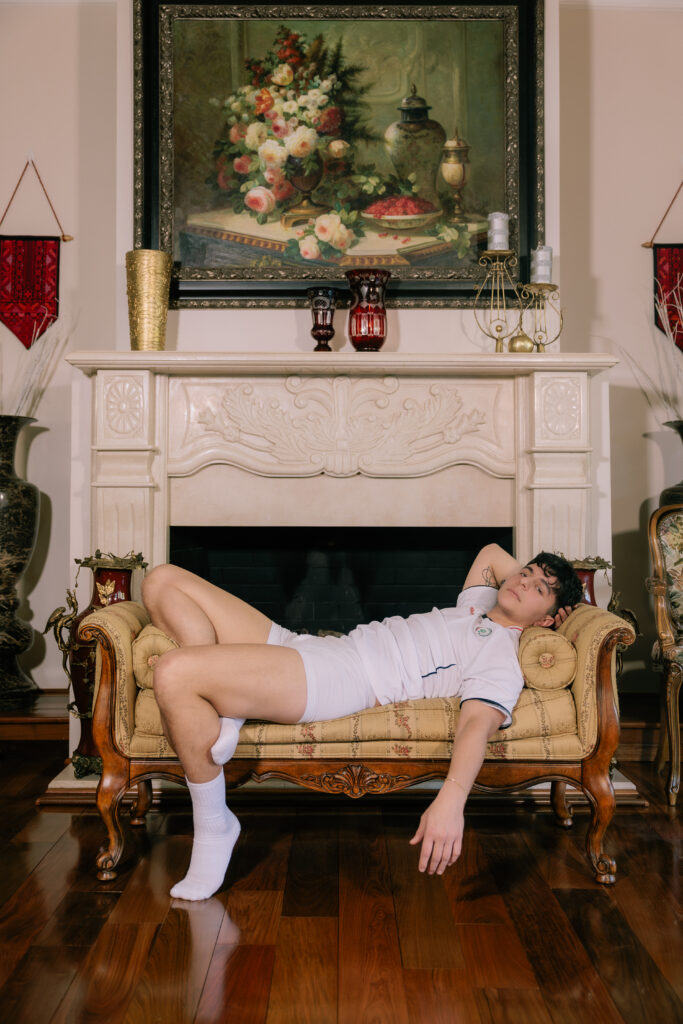
Photography by Roy Freiha
Styling by Janet Shackleton
This feature is part of the “Fields of Gestures” issue
Clarissa is a friend and collaborator whom I first sought out as an oud teacher when they moved to the San Francisco Bay Area. As queer Arab artists living in the Bay, we often have discussions about the role of music in politics, navigating the socioeconomic conditions of where we live, and how queerness shapes the music that we produce. – Camellia Boutros
Hey, Clarissa. We’re in Oakland, California. You’re obviously this amazing musician with a lot of experience under your belt, but before we go deep into the questions, maybe you can describe to me what your music career has been like and how you came to be in the Bay?
I was born and raised in Southern California, and I came to the Bay a couple of years ago. In LA, obviously there’s a lot of gigs, and I still have my family in LA, so I go back a lot, but I appreciate the Bay for having a big, solid Arab community in a very centralized place. I started transitioning when I had moved up here, so I also found a really amazing queer Arab community that felt super supportive.
Can you tell us a little bit about yourself: Your background, upbringing, and how you learned to play the oud?
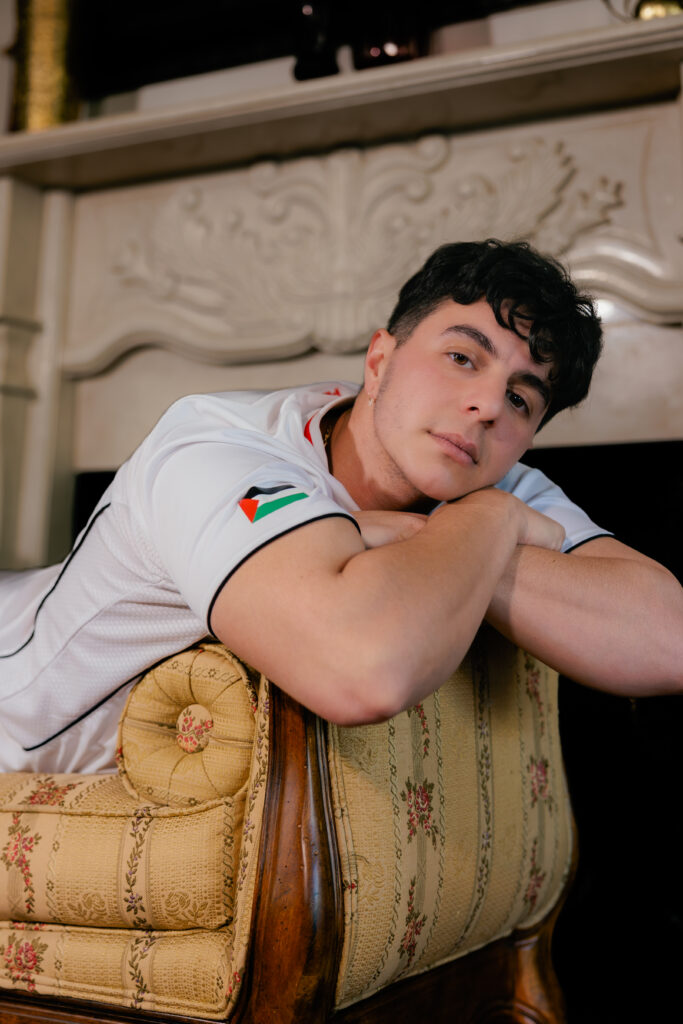
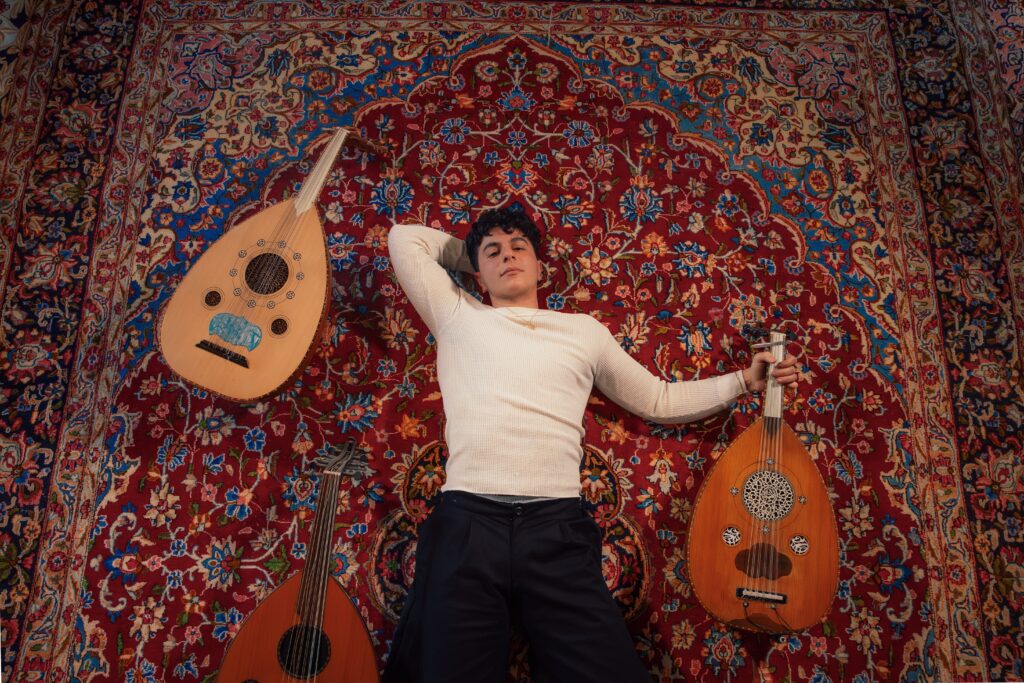
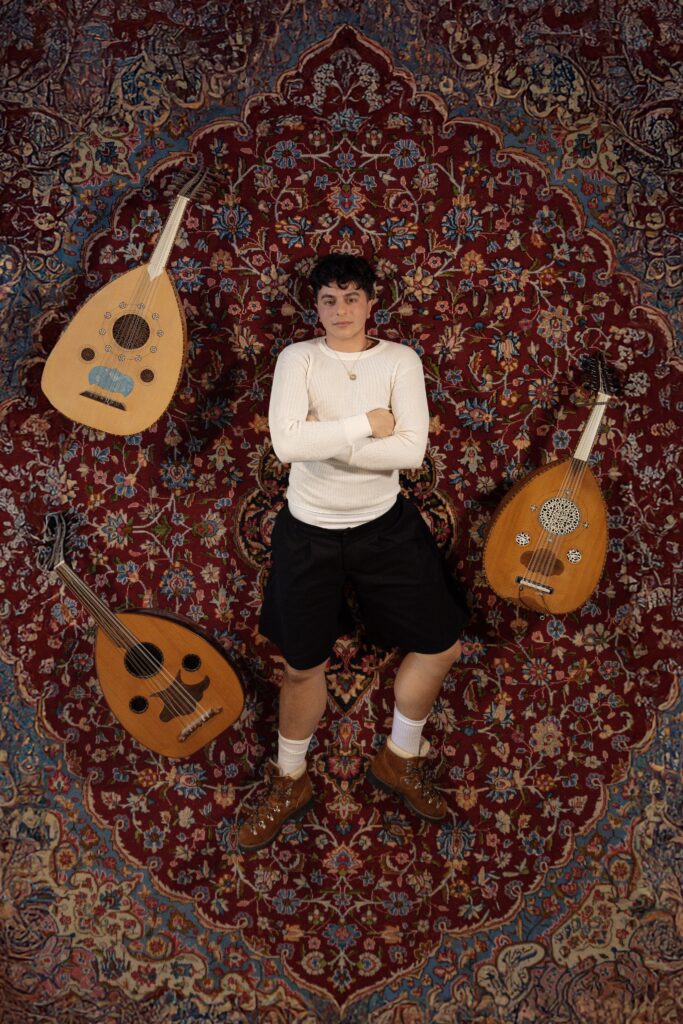
I actually didn’t start playing the oud until I was 18. I always had a deep appreciation for the music and grew up around it, but I was originally a guitar player. But then I went to college, and I had this opportunity to learn the oud. So, I began taking lessons with professor [Scott Marcus] and eventually joined the Middle East ensemble on campus, which led to me switching my major, so I kind of just fell down the rabbit hole of falling in love with the oud. Both sides of my family are Palestinian; my mom’s side of the family is from Ein Karem, and my dad’s side is from Jerusalem. I got lucky that I grew up in a family that immersed me deeply in Palestinian music and heritage, which fostered a really deep pride in my culture. On top of that, my grandparents were my next-door neighbors. They were a constant presence in my life. I would wake up every morning, grab my oud, and sit with my grandfather and grandmother (when she woke up) and have coffee and play oud for them. It was a beautiful way to spend time with my grandparents and learn. Having an audience to play for and seeing them respond in the ways that were culturally relevant really taught me so much. They were steeped in the tradition of tarab born in Palestine, and they were able to be a sounding board for me in many ways. I could play with them and see what they responded to; they would notice when I modulated maqamat and give me a big “Allah!” In these moments they were teaching me. I had access to people who were so deep in the tradition I could learn from them, not because they were musicians but appreciators and listeners, though my grandfather did love to sing and had a beautiful voice. Tarab is not just about the musician but also the listeners. There’s a conversation happening; they’re feeding off each other energetically. It’s not a one-way experience; it’s something where you’re performing for an audience, they respond to you, and their response hypes you up, and so you in turn play even better. It’s an energy feedback loop.
Have you been able to go back home to Palestine? Did that influence any of the music that you write?
Yeah, I’ve gone back many times, and I think it’s definitely influenced my music. The first time, I wasn’t playing the oud; I was playing guitar. I had a very different experience the second time, coming back and playing oud. The way I was able to connect and navigate particular spaces because of my oud playing provided me with access to different community spaces, which I was super appreciative of. For me, growing up in diaspora, I was so blessed to have my grandparents next door and my parents at home, but to have that access back in your homeland, wow. It felt very special to be welcomed and received in that way. I remember one night in particular that we spent at my cousin’s home in Bethlehem barbequing and playing music with my family and other members and musicians of the community who were invited. We sat around a table filled with food and shared stories and played music all throughout the night. I was super grateful for the oud and how music has opened doors of connection for me. It was one of my favorite memories in Palestine. I brought that back and had so many ideas I wanted to compose with, sentiments I was feeling and wanted to incorporate in my music.
Politically, we’re in a heightened moment. You’ve been making music for a long time, and you happen to be Palestinian and trans. Have you personally felt the impact from the political shifts resulting from October 7th and the second Trump presidency?
As a working-class, full-time musician, there are many layers that artists like myself have to navigate in this political juncture. There’s already so much censorship that we’re facing, as Arab artists and especially as Palestinian artists, and trying to gain access to institutional money has been increasingly difficult. For so many years, cultural and political organizations brought me to campuses across the US. However, most of those student organizations have since then been suspended and labeled as terrorist organizations for advocating for Palestinian liberation. So, these tactics of repression have had a direct impact on my ability to access institutional funding. The ruling class has made it abundantly clear that they want to neuter and depoliticize our art by any means necessary. Then, you add the queer and trans element into the equation, and it’s pretty difficult. I can’t get my ID changed because of Trump’s policies, where I, as a trans person, risk having my passport confiscated for an undetermined amount of time. So every time I travel for a gig, it’s anxiety-inducing, and I fear the possibility of having issues at the border. It starts to weigh on you.
Since October 7th, I’ve been to Cuba a couple of times, and seeing how bold and defiant people can be in the face of US repression while carrying such high levels of internationalism and solidarity with oppressed people is so inspiring. Ironically, I think these political escalations have forced me to double down on my commitment to producing and composing music that aligns with my political values and to not waver in my commitment. I really think that this is the time to show the establishment that its attempts at repression will not silence us into producing art for their comfort.
And even down to the level of the indie artist, that pressure is imposed upon us. So, as a musician of the Palestinian diaspora, whether you’re performing on stage or you’re recording in a studio, how do you keep yourself in conversation with the political? What do you do, or not do, so that you’re not playing into either the commodification or the censorship?
I think that it’s important for people to acknowledge that everything we do is political. All of our art is political. And if you are not convinced that it is, then it will be easier for your art to be co-opted by empire. I was always super inspired by people who had strong political convictions, because then I felt like their art was coming from a place that I trusted, like the late Lebanese singer Ahmad Kaabour, and I always wanted to keep that in mind for myself as an artist. A big portion of the industry right now wants us to be satisfied with representation to facilitate our culture’s commodification, and that is something I am very aware of and try to actively push against. Also, my career as a musician started around the same time as my political organizing in college, and to me, the two were never separate and always informed each other, and that has been something I have tried to keep with me in my music.
You became known for your instrumental music, but on your most recent album there are many tracks where you sing as well, and people are really responding to your voice. How has that journey been, delving deeper into your voice as an instrument?
I think that it was like a personal challenge for me to try to make this album and to sing on it in Arabic. I remember asking myself, okay, can I write lyrics in Arabic? I remember always being told by elders in the community and other oud players that if you play oud, you have to sing. That used to bring me a lot of anxiety because I felt dysphoric around my voice pre-transition.
After starting T, I began feeling some newfound excitement around my voice after it dropped, and I was feeling more comfortable to finally try singing. One afternoon, I created the beat, which eventually became the track “Leh,” the opening track of my latest album. It was this fun baile funk mixed with electric oud; I put some pedals on the oud! It was eclectic, and I really liked it. So, I sent a bounce to Mohammed El Kurd, and within like five minutes, he sent me the lyrics. But he asked me, who’s going to sing it? So I kind of had no choice and decided, screw it, I’ll try singing it. I recorded my vocals and sent it back to him. He loved it! That response helped me feel confident to start singing on my tracks, and that gave birth to what later ended up becoming the Bakhaf Al Layl album.
On top of all that, I’ve received such beautiful feedback on the album while on tour. I’ve been playing in many cities I’ve never even visited before, fans have shared stories of traveling from so far, and they’ve shared the resonance and how much my music has helped them. And that’s been super special.
I would love to know more about the interplay of genres in your work. In your latest album, Bakhaf Al Layl, you mix traditional Arabic Maqamat and other elements. Can you tell me more about that?
I’m somebody who always wanted my music to be rooted in the traditional Maqamat and the traditional Arabic music. That’s something that’s been important to my career; it’s something that I continually try to ground my music in. But with this album, I was trying to give myself a little more liberty to explore. Being in the diaspora, I am around so many sonic influences. I listen to a lot of Arabic music, but I also listen to so much other music in a day. My partner, for example, likes to wake up in the morning and put records on, so she’ll be playing so many types of music across so many genres, whether it’s Brazilian Bossa, Salsa, or Jazz. So a lot of this music is new for my ears to digest. It’s new sounds, new sonic areas that I haven’t really explored, so it’s been fun to open doors into that and see how I can mix my music with some of these influences as well. That’s where I was going with that and why I took it in that direction, wanting it to be a little more adventurous than my previous releases. Like, why not just have fun with this one and see what happens? Let it be as eclectic as I want it to be.
You recently released a new track, “Shlomo,” which features lyrics by Palestinian poet Mohammed el Kurd, a longtime collaborator and friend of yours. Can you tell me a bit about it?
Yes! I recently released this track with Mohammed el Kurd along with my father, Nabil Bitar, called “Shlomo”. We had previously released a track all together called “Nasak” in 2023, which is a track against the normalization of Arab nation-states and governments colluding both politically and economically with Israel. In “Nasak,” we throw a dig at the 1993 Oslo Accords as an example of betrayal against the Palestinian resistance, masked as peace negotiations. Actually, we dropped Nasak on the anniversary of the signing of the Oslo Accords. That same day, Mohammed wrote the lyrics for Shlomo. We sat on Shlomo for a few years because of the genocide in Gaza and feeling uncertain of when it would be appropriate to release. Shlomo opens up with a clip of Mohammed’s sister, Muna, arguing with Jacob, an infamous Jewish New Yorker who came to steal and occupy half their home. The track talks about land theft and the violence of Jewish supremacy imposed all over Palestine. This song is really a diss track against these invaders on our land. It’s for all the Shlomos and their children and their children’s children.
Mohammed is very sarcastic and likes to write these sarcastic tracks. Which hits the vibe of my dad, who is a sarcastic person. As a collaborator, the energy works well. I’ve historically released a lot of songs with Mohammed or songs that were inspired by his poetry. The first EP I ever dropped was with him, called Bellydancing on the Wounds in 2019, which was a poetry/oud EP. Mohammed wrote all the poems; I set them to music, and it was a beautiful project that I still hold close to my heart. We continued to have opportunities for collaboration, like writing music for my father. And then yeah, we dropped this song, Shlomo. It has been amazing to have both of them as musical collaborators, to share ideas with them, people whom I respect and trust both musically and politically. A blessing to be able to work with them.
Another music question. Earlier you mentioned the Arabic Maqam system and how the Maqamat and learning the oud helped connect you to Arabic culture in a more direct way. Could you describe, firstly, what the Maqamat are for people who might not know? Why did that make you feel more connected?
The maqamat system is the theoretical backbone of Arab music in which it’s organized. I like to describe it to my students as an interconnected web of modes built from tetrachords, groups of 3, 4, or 5 notes, that are organized in families that are really the foundation of Arab music. The maqam system was formalized through the study of Quranic recitation. It’s a modal system in our culture and has a long history. So I was super excited to learn the theory because I grew up as a guitar player but had a love for Arabic music, so when I finally started playing oud and learning all the maqamat, it was like something immediately clicked for me. It has also been such an aid compositionally speaking to be able to go back and rely on the theory and the history. To me, I always feel super rejuvenated and inspired when I go back to the classics.
Your songs have some compelling themes on visibility, homeland, lineage, and defiance. How do you go about choosing these themes for your compositions and your music?
I think right now we’re at an interesting moment politically and artistically where people are seeing institutions attempt to profit off the commodification of our identity in some ways, and they want us to be satisfied with romanticized representation as being enough, enough to constitute progress, and that’s something that I don’t agree with, and I also don’t want my art to be in line with that. I really try to make sure that my art has an impact on my community, the way that I feel about art from people who inspire me. Like poets, for example, or writers who inspire me, like Ghassan Kanafani, people who make sure their art is an instrument of the fight against empire. That’s super important to me. So that grounds me: making sure that my art is in line with that and is in conversation with those people who are inspirations of mine. I think that grounds me and makes me want to continue to make art that challenges some of those narratives and some of that inclination to just be happy with representation.
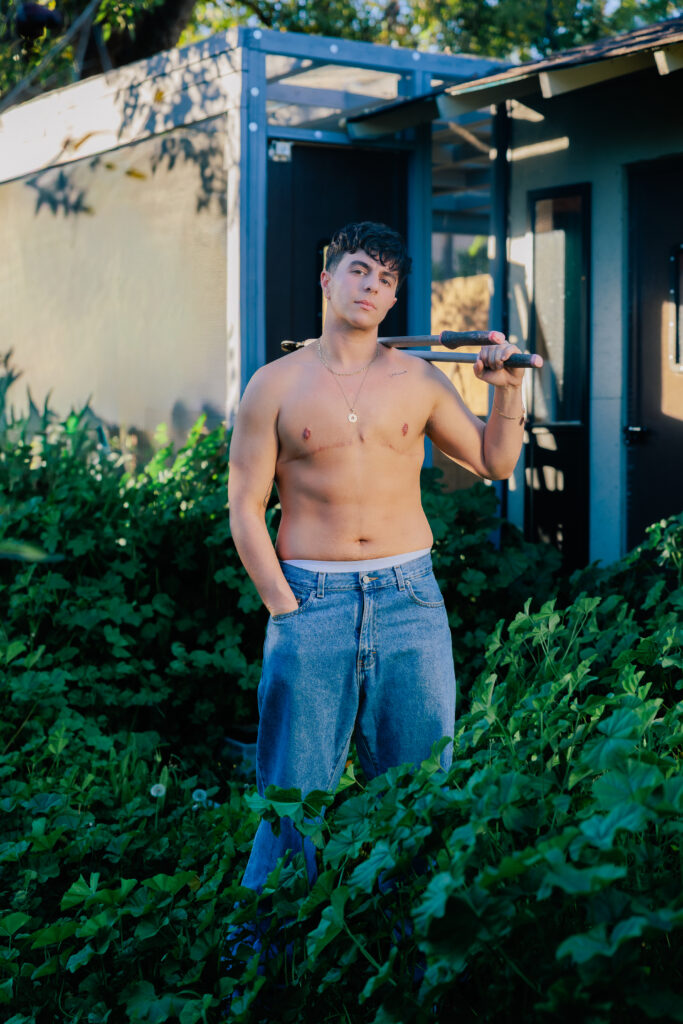
As a working trans musician, can you tell me more about this intersection between music and your visibility as a queer artist? How does that feed into the values that you are trying to communicate through your work?
I think that it’s been a journey. To get to this point, I had to learn the tradition from all cishet men, and that has come with its layers of complications as a queer person and as a trans person. I’ve had to be in scenarios where I would dress differently for lessons so teachers would take me more seriously, or dress more femininely, or feel like I need to hide aspects of my queerness that were pretty hard for me to hide in order for people to respect me, or to provide me with access to learning parts of the tradition. That was really difficult, I think, initially, and it took a lot for me to push through that. Now that I’ve reached this point in my career, I’ve had many people come to me, like queer musicians and people who wanted to learn from me because I was queer and because they felt that it would be a safer space. I think that’s super important to me, being somebody who is visibly queer and trans in the community. It’s important for people to see us accomplishing things and participating in the tradition and to not feel that we’re going to be on the outs because of that, which was a big fear of mine when I transitioned. So it’s been something that I think is critical to continue to push.
This has been a difficult few years, but what are some moments that have seeded your optimism and fed you creatively as an artist?
Seeing communities continuing to be defiant currently just keeps me optimistic. Under so many difficult conditions, seeing people choose to fight back. It’s just important to be a thorn at this point; we all have to do that in different ways. There’s a youth ensemble I saw in Cuba that was reciting Palestinian poetry. That was a sweet moment of internationalism that just brought me a lot of hope. It reminded me that people across the world really do feel differently and that the world is not just the United States. Given the level to which Zionism has captured institutional and third spaces here, it’s important to remember that. That does give me a lot of hope.
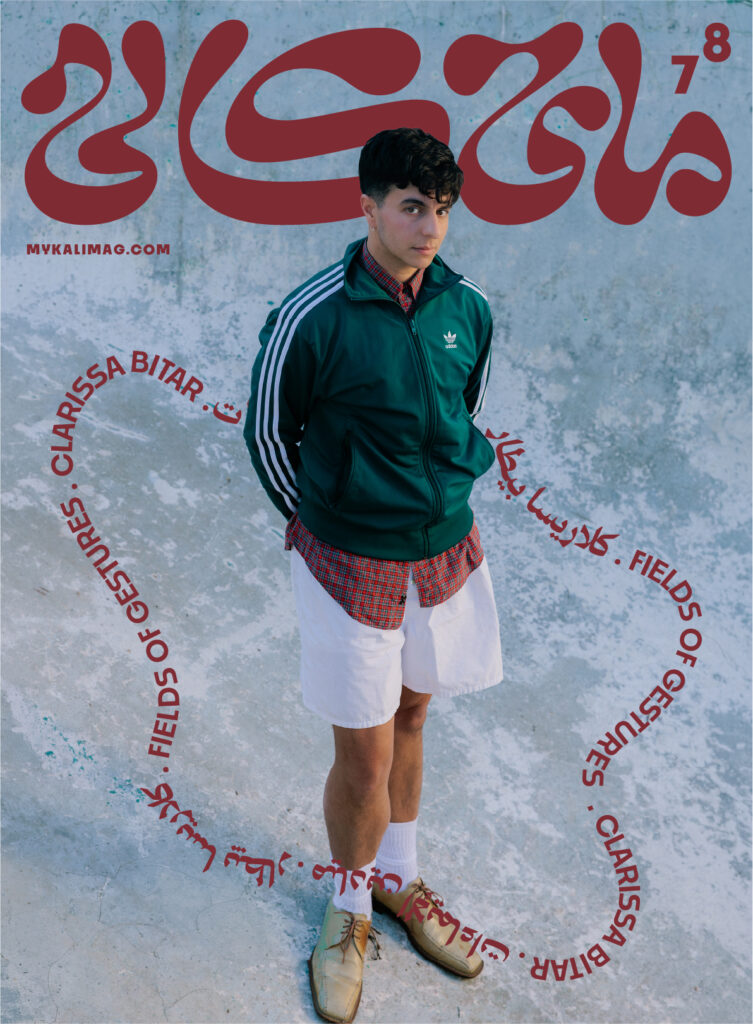
On the cover: Clarissa Bitar
In conversation with Camellia Boutros
Photography by Roy Freiha
Styling by Janet Shackleton
Cover design by Morcos Key
Cover design assembled by Alaa Sadi
Editor in Chief: Khalid Abdel-Hadi
This feature is part of the “Fields of Gestures” issue