
(Link to submission form)
Deadline October 17, 2026
Central question: How does the militarization of intimate and digital spaces affect how we understand our bodies, desires, sexuality, relationships, and freedoms?
Drawing from Toni Morrison the public is private and the private is public. We cannot access knowledge unless we identify who we are or that we are not a robot. Neither the screen nor the bedroom is simply private. Our most intimate spaces are increasingly shaped by systems of surveillance, extraction, classification, and control.
For this issue, we understand militarization as the expansion of military logic into everyday life: from surveillance, discipline, threat detection, border-making, data extraction, censorship, to the division of people and bodies into categories of risk. Ultimately, these logics operate through algorithms, identity-verification systems, cybercrime laws, location tracking, content moderation, and artificial intelligence.
If the bedroom is often imagined as the last refuge from the outside world, what happens when it becomes another monitored and contested territory? What do our intimate lives reveal about the political and economic structures governing society?
Pornography offers one point of entry into these questions. As one of the largest archives of human fantasy, it has long been intertwined with technological development: from print and home video to online platforms, subscription economies, and generative artificial intelligence. Each transformation has altered how bodies and desires are produced, circulated, consumed, and monetized.
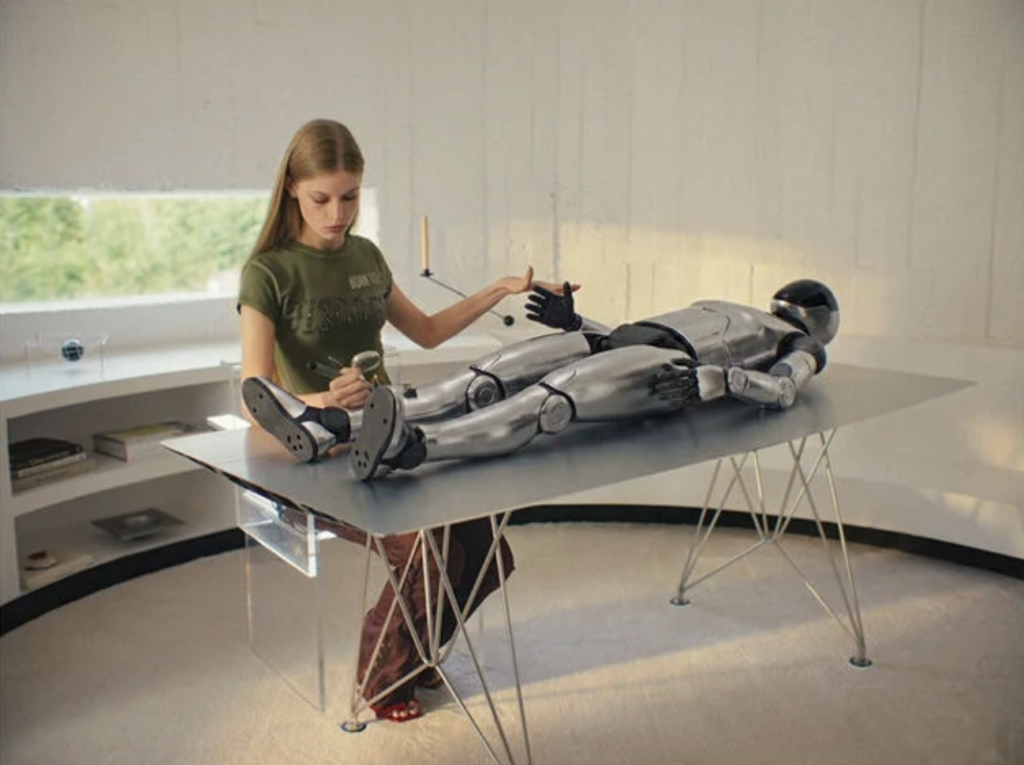
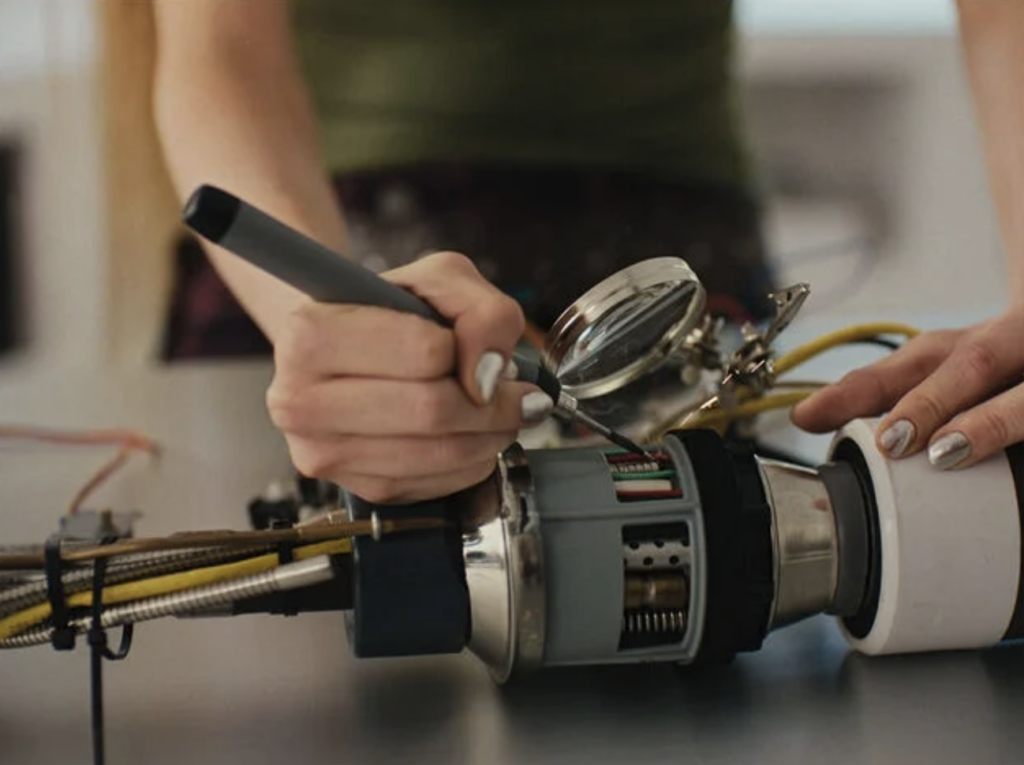
Vivian Wilson’s “Born to Disobey” campaign for Desigual stages a confrontation between the human body and the obedient machine, a pointed refusal of automation, technological authority, and the systems that seek to make us programmable.
What angers us is knowing that the actor behind all that has been mentioned is neither hidden nor unknown; its origins can be traced. Every new innovation initially carried the promise of advancing humanity, only to become a lethal reality. The drones that could drop lifebuoys to migrants lost at sea are the very ones that fire bullets at them. The laboratories that could be devoted to keeping the world warm are the ones inventing biological weapons and precision nuclear bombs. Behind this violence is not a soulless automated system, but a minority that profits from waste and the destruction of the earth.
The digital world also depends on forms of labor and environmental extraction that are often kept out of sight: content moderators working night shifts “to clean” the internet, platform workers managing sexualized attention, data laborers training artificial intelligence, cooling systems consuming immense quantities of energy and water, and lithium wars sustaining the devices through which intimacy is mediated.
In this sense, digital desire is not immaterial; it has workers, mines, borders, servers, and waste. Thus, the body is rendered simultaneously desirable, suspicious, consumable, and disposable.
How is technology used in resistance movements? What can we learn from the innovation/imagination of freedom fighters/resistance movements to advance our fight for liberation?
What loop holes can we find in digital structures of oppression? And how can we use them in our liberation movements?
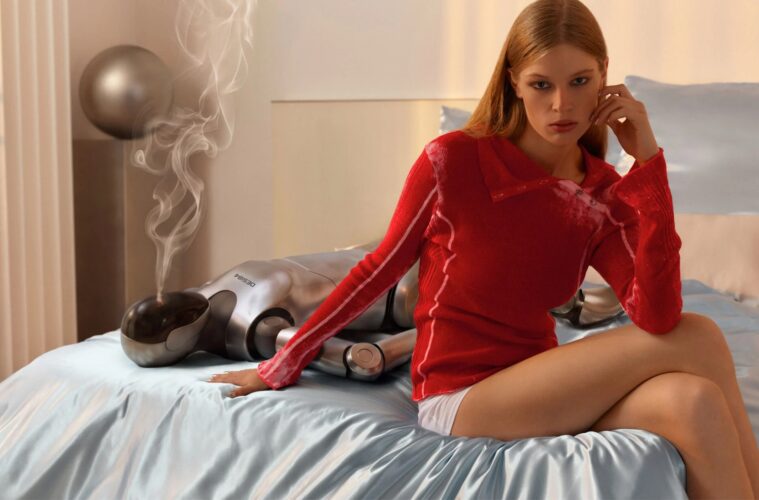
Images used for the open call – This question of obedience also runs through Vivian Wilson’s recent Born to Disobey campaign for Desigual. Wilson, a trans model, outspoken critic of her estranged father Elon Musk, and a public supporter of Palestine, appears alongside a humanoid robot that increasingly resembles the machines associated with Musk’s technological empire. While the campaign never names her father, the provocation is difficult to miss: Wilson, who legally separated herself from Musk and has publicly challenged his politics and views on technology, places herself in direct confrontation with the very systems of automation, obedience, and technological authority he represents.
Possible points of departure include:
- The bedroom as a political, militarized, or surveilled space
- Pornography as an archive of fantasy & power
- Artificial intelligence, synthetic bodies, and simulated intimacy
- Consent, authenticity, deepfakes, and the ownership of one’s image
- Queer desire under digital surveillance and censorship
- Orientalism and the fetishization of Arab and racialized bodies
- The sexualization of military, police, and institutional power
- Sexual violence, exposure, and humiliation as technologies of war
- Revenge pornography and the weaponization of intimate images
- Cybercrime laws, age verification, digital identity, and online anonymity
- Borders, location tracking, VPNs, disappearance, and digital visibility
- Content moderation and the hidden labor sustaining digital platforms
- Platform capitalism, subscription economies, and the commodification of intimacy
- Mental health, misinformation, advertising, and the management of public imagination
- Consumerism as an intimate and bodily regime
- AI, omniscience, and the godlike authority attributed to technology (Godification)
- Religion, spirituality, obedience, end of times / apocalyptic speculations or signs.
- Digital infrastructure, environmental collapse, water consumption, and extractive economies
- The body as data, content, evidence, weapon, commodity, or site of refusal
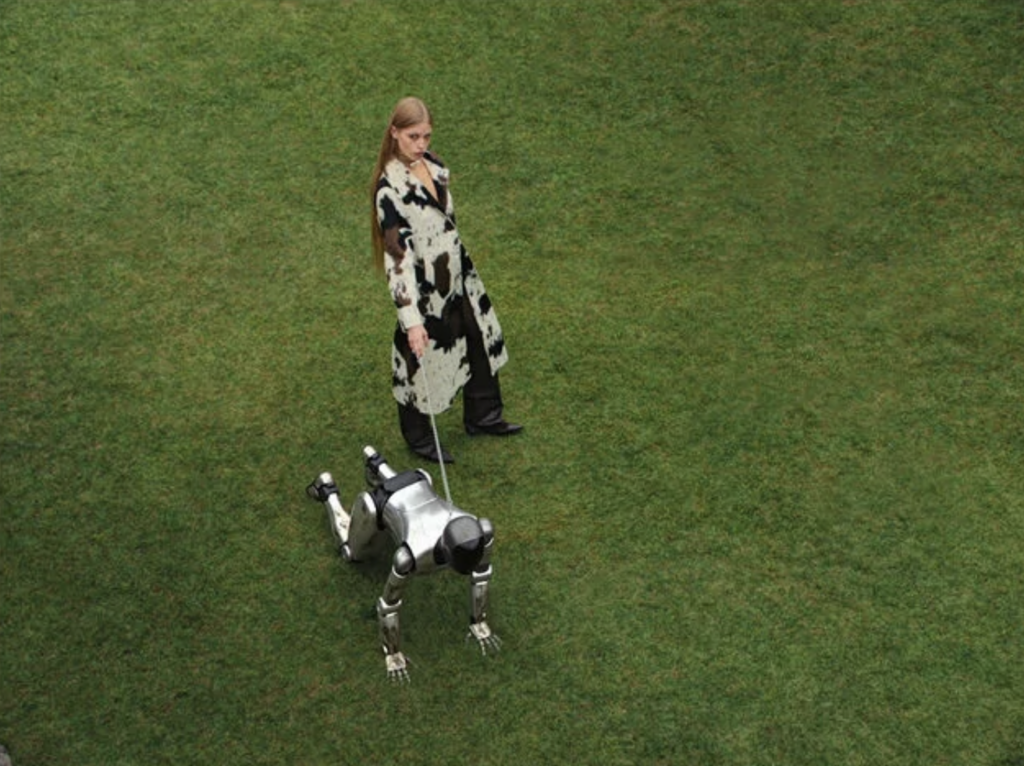
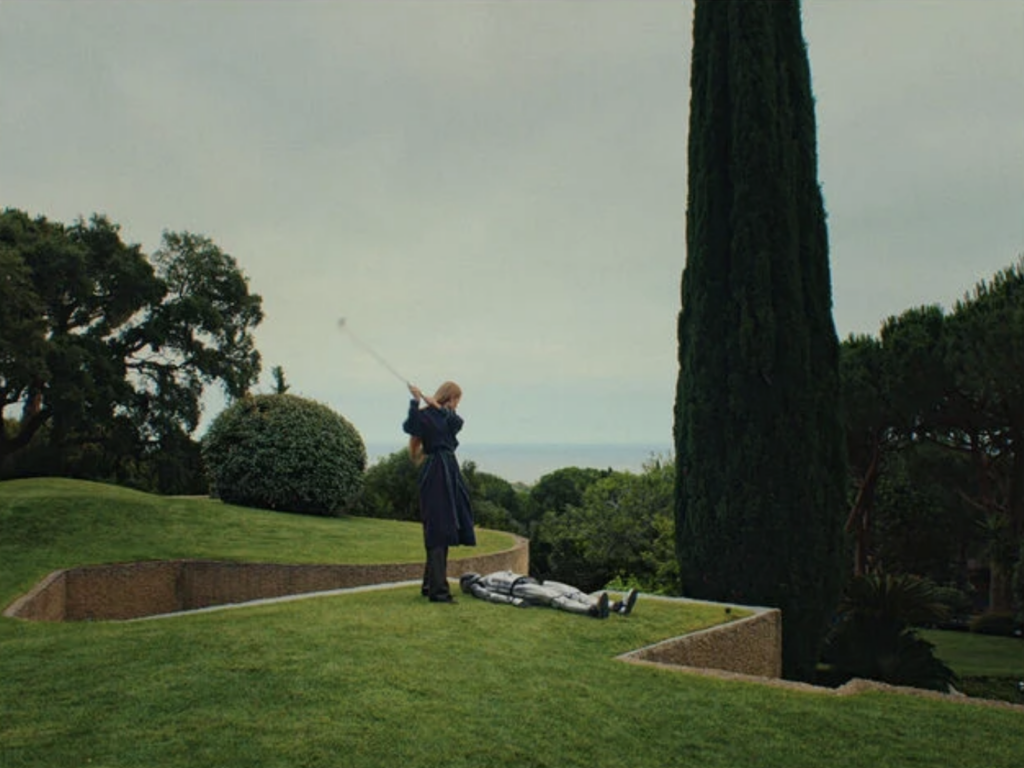
Vivian Wilson’s “Born to Disobey” becomes a visual confrontation between the human body and the machine: a refusal of obedience, replication, and the systems that seek to make us programmable.
We invite writers, artists, researchers, cultural workers, and activists to respond through essays, criticism, visual work, interviews, conversations, and experimental forms.
For capacity reasons we do not accept poetry or fiction submissions.
Submissions may be personal, political, theoretical, speculative, or interdisciplinary. We welcome work that moves between the intimate and the structural, asking not only what technology does to our bodies, but what our digitally mediated desires reveal about power.
Note on the use of AI:
We encourage contributors to keep their writing and artistic processes free from AI tools.
Deadline October 17, 2026
(Link to submission form)